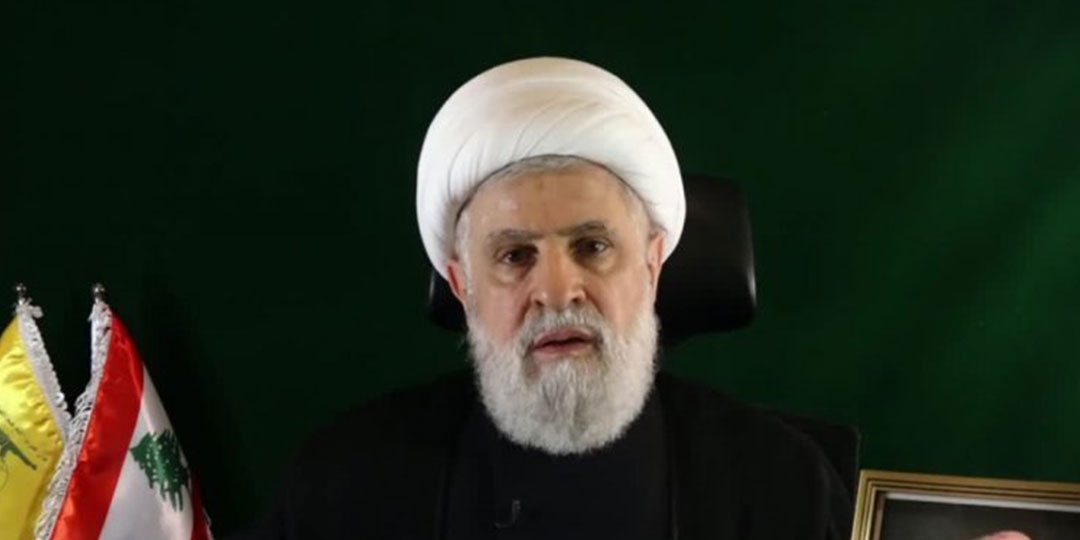

Hezbollah Secretary-General Sheikh Naim Qassem declared Monday that the Israeli enemy has reached a dead-end, emphasizing that the Islamic Resistance will continue with undiminished strength and cannot be defeated. Qassem stated that the enemy “was surprised by the steadfastness of the resistors,” asserting “the resistance is continuous, strong, and cannot be defeated.” The Hezbollah leader categorically rejected direct negotiations with Israel, accusing the Lebanese government of having “rushed to offer unnecessary concessions.” Simultaneously, Hezbollah announced successful targeting of an Israeli D9 military bulldozer in Bint Jbail with diving aerial strikes achieving confirmed hits.
The Lebanese Health Ministry reported 14 dead including two children and 37 wounded from Israeli airstrikes on southern Lebanon overnight Sunday. Israeli forces continued systematic violations of the ceasefire with artillery bombardment, airstrikes, and drone attacks. President Joseph Aoun defended the negotiation path as a necessary step to end war while maintaining Lebanese state protection and sovereignty.
Qassem Affirms Resistance Will Continue With Full Strength
Hezbollah’s leadership issued unequivocal statement on resistance continuation. Sheikh Naim Qassem stated: “The resistance is continuous, strong, and cannot be defeated.”
He added: “The enemy was surprised by the steadfastness of the resistors,” reflecting Hezbollah’s assessment that Israeli forces underestimated resistance resolve and capacity.
Characteristics of Continuing Resistance
The resistance demonstrates multiple defining characteristics:
- Continuity: Uninterrupted operations
- Strength: Effective military capabilities
- Steadfastness: Unbroken determination despite pressure
- Adaptability: Flexibility in operational tactics
- Commitment: Unwavering dedication to principles
Qassem’s Criticism of Lebanese Government
Hezbollah leader issued sharp criticism of state authority. Qassem stated: “The authority rushed to offer unnecessary concessions.”
He added: “Direct negotiations are non-existent for us,” emphasizing Hezbollah’s categorical rejection of direct negotiation format.
Hezbollah’s Objections to Direct Negotiations
The movement views direct talks as problematic because:
- Concessions: Government offers concessions without reciprocal gains
- Principles: Direct negotiations violate resistance movement principles
- Position: Negotiations should not occur from position of weakness
- Sovereignty: Defense of sovereignty requires uncompromising stance
- Strategy: Resistance remains the only viable pathway
Qassem Proposes Indirect Negotiation Alternative
The Hezbollah leader suggested alternative approach. Qassem stated: “We call on the authority to stop direct negotiations and pursue indirect negotiation paths.”
This reflects a nuanced position permitting dialogue through intermediaries rather than direct Israeli-Lebanese engagement.
Hezbollah’s Refusal to Surrender Weapons
Qassem emphasized non-negotiable commitment. He declared: “The party will not abandon weapons, defense, and the field.”
This represents explicit commitment to maintaining armed capacity and military presence regardless of political pressures.
Non-Negotiable Elements of Hezbollah Position
The movement refuses to compromise on:
- Weaponry: Maintaining armed forces
- Defense: Right to self-defense operations
- Field Presence: Sustained military engagement
- Operational Freedom: Unrestricted operational capacity
- Core Principles: Fundamental ideological commitments
Qassem’s Assessment of Iranian Role in Ceasefire Achievement
Hezbollah leader credited Iranian diplomacy. Qassem stated: “The ceasefire would not have occurred without Iran’s position in Pakistani negotiations.”
This reflects Hezbollah’s appreciation for Iranian diplomatic leverage and support in advancing resistance-aligned interests.
Significance of Iranian Support
The movement recognizes Iranian role as:
- Decisive: Determining negotiation trajectory
- Effective: Successful pressure for ceasefire
- Strategic: Reflecting broader regional positioning
- Sustained: Continuing support anticipated
- Balanced: Combining pressure with dialogue
Hezbollah’s Military Targeting of Israeli D9 Bulldozer
The movement announced successful military operation. Hezbollah statement declared: “In defense of Lebanon and its people, and in response to the enemy’s violations of the ceasefire and destruction of homes in southern Lebanese villages, Islamic Resistance fighters targeted an Israeli military D9 bulldozer while conducting home demolitions in Bint Jbail with diving aerial strikes.”
Operational Details of Bulldozer Targeting
The operation involved:
- Target: Israeli D9 military bulldozer
- Location: Bint Jbail
- Method: Diving aerial strikes
- Justification: Response to home demolitions
- Result: Confirmed casualty hits
Continued Israeli Violations Despite Ceasefire Agreement
Israeli forces persisted in attacking southern Lebanon. Lebanon’s National News Agency reported: “The Israeli occupation army continued attacks on southern Lebanon in violation of the ceasefire that began April 16.”
The agency stated: “Artillery bombardment targeted western sector villages in Tyre district, while an Israeli drone exploded near Samayah intersection near the city.”
Pattern of Israeli Violations
The violations demonstrate systematic breaches including:
- Artillery Bombardment: Targeting populated areas
- Aerial Bombardment: Systematic airstrikes
- Drone Operations: Unmanned aircraft attacks
- Home Demolition: Bulldozers destroying civilian residences
- Road Blocking: Restricting civilian movement
Casualty Toll From Israeli Airstrikes
Lebanon’s Health Ministry reported severe losses. The ministry stated: “14 dead including two children and 37 wounded in Israeli airstrikes on southern Lebanon overnight Sunday.”
These figures reflect continuing destruction and civilian casualties despite ceasefire agreement purporting to halt hostilities.
Nature of Casualties and Losses
The figures illustrate:
- Fatalities: 14 persons killed
- Children: Two children among casualties
- Wounded: 37 injured persons
- Civilian Focus: Majority civilian casualties
- Geographic Scope: Southern Lebanon throughout
President Aoun Defends Negotiation Choice
Lebanese President responded to criticism. President Aoun stated: “The ceasefire represents a first and necessary step before entering into any subsequent negotiations with the Israeli entity.”
He added: “The United States has been informed of this position since the first moment.”
Presidential Rationale for Negotiation
The President believes negotiation serves:
- Objective: Ending existing war condition
- Process: Ceasefire as prerequisite step
- State Protection: Negotiation necessity for state defense
- Results-Based: Judging pathways by outcomes rather than assumptions
- Clarity: Distinguishing negotiation from surrender
Aoun’s Response to “National Consensus” Criticism
President addressed Hezbollah’s complaints. Aoun questioned: “Was the decision for war itself made with national consensus?”
He pointed to “double standards in assessing political choices,” suggesting inconsistency in Hezbollah’s criticism.
The Consensus Disagreement
The controversy reflects:
- Differing Standards: Hezbollah and government apply different criteria
- Conflicting Principles: Disagreement on legitimate political decision-making
- Contradictory Desires: Divergent political pathway preferences
- Political Reality: Deep divisions in Lebanese society
- Fundamental Split: Profound disagreement on strategic choices
Presidential Assertion That Negotiation Is Not Surrender
Aoun clarified critical distinction. The President declared: “Negotiation does not mean surrender; it is a path to protect the state.”
This represents fundamental disagreement with Hezbollah’s equation of direct negotiation with national betrayal.
Presidential Political Philosophy
The President believes negotiation serves:
- Dialogue: As effective political tool
- Protection: State protection through diplomatic engagement
- Balance: Between resistance and dialogue
- Realism: Accommodation of current realities
- Wisdom: Selecting optimal strategic pathway
Deep Lebanese Divisions Over Correct Path
Disagreement between Hezbollah and President reflects broader Lebanese split:
Hezbollah Position:
- No direct negotiations
- Continued resistance operations
- Weapons maintenance
- Iranian support essential
Presidential Position:
- Negotiation necessity
- War termination priority
- State protection through diplomacy
- International cooperation
Potential Implications of Internal Disagreement
The conflict may affect:
- Stability: Unclear national strategic direction
- Unity: Division in national consensus
- Negotiations: Internal disagreements may undermine talks
- Warfare: Continuation likely if parties cannot agree
- Future: Uncertain trajectory
International Dimension of Lebanese Crisis
The Lebanese split occurs within broader context:
- American Involvement: US pressure for diplomatic solution
- Iranian Support: Iranian backing for Hezbollah position
- International Concern: Global interest in regional stability
- Economic Impact: Global economic effects of instability
- Regional Dynamics: Broader Middle Eastern conflict implications
Civilian Suffering Amid Political Dispute
Daily casualties underscore human cost:
- Death Toll: 14 killed overnight; hundreds killed in weeks
- Displacement: Thousands displaced from homes
- Infrastructure: Widespread destruction
- Humanitarian Crisis: Severe shortages of essentials
- Trauma: Psychological damage to population
Conclusion:
Lebanon faces profound strategic disagreement between Hezbollah’s insistence on continued armed resistance and President Aoun’s assertion that negotiation represents the only viable path to state protection. The fundamental disagreement reflects deeper Lebanese divisions regarding the proper response to Israeli military pressure and ongoing conflict.
Continued Israeli violations of ceasefire agreements despite formal arrangements demonstrate the fragility of current arrangements. Daily casualties among civilian population intensify pressure on Lebanese government to seek solutions while Hezbollah leadership maintains uncompromising resistance stance.
The critical question facing Lebanon remains unresolved: How can the state balance defense of sovereignty with protection of civilian population from ongoing destruction? Resolution of this question will determine Lebanon’s trajectory in coming months and years. Without agreement between major Lebanese political actors on strategic direction, prospects for sustainable resolution remain uncertain and civilian suffering continues unabated.