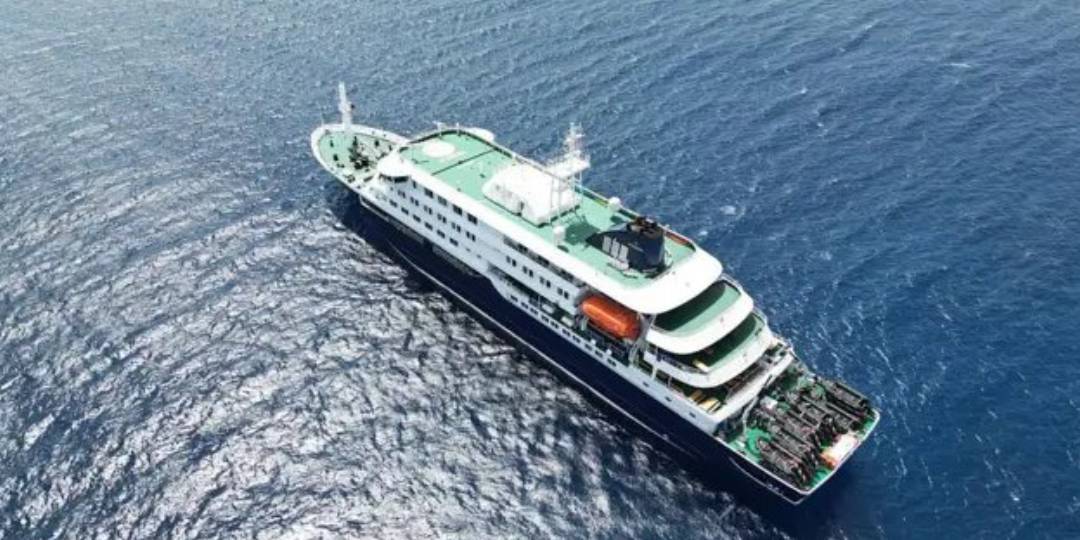

French authorities announced today the first suspected Hantavirus case within the country from a French citizen aboard cruise ship MV Hondius. Symptoms appeared during the patient’s airborne evacuation from the Canary Islands. In parallel, American health authorities reported two US citizens infected with the same virus. French health officials assured the public the situation differs from COVID, noting the Andes strain requires very close contact for transmission despite airborne capability.
The announcement reflects virus spread among cruise ship passengers.
France registers first Hantavirus case
French authorities “announced today the first suspected Hantavirus case within the country.”
The case involved “a French citizen who was aboard the cruise ship MV Hondius which experienced virus outbreak.”
French Prime Minister Sebastian Lecourno explained “the infection appeared in one of five persons airlifted yesterday off Tenerife islands.”
The patient “began suffering from fever and breathing difficulty during return flight.”
Case details and symptoms
The case included:
French citizen cruise ship passenger
Symptoms during airlift evacuation
Fever and respiratory difficulties
Immediate hospital transfer upon arrival
Hospital isolation and safety measures
The Prime Minister stated “upon arrival all evacuees were transferred to Bichat-Claude Bernard Hospital in Paris.”
The hospital serves as “reference center for highly contagious infectious diseases.”
All patients “were placed under strict health isolation.”
The arrangement ensures “maximum containment and monitoring.”
French precautionary measures
France implemented:
Immediate airlift evacuation
Transfer to specialized infectious disease center
Strict health isolation
Continuous medical monitoring
Health Minister reassures public
Health Minister Stephanie Riest “reassured the public that the situation is not like COVID.”
She emphasized that “the Andes strain despite ability to transmit through air requires very close contact.”
She affirmed “authorities took maximum precautions to prevent any infection spread.”
The Minister’s reassurance aimed to calm public fears.
Hantavirus characteristics
The virus features:
Airborne transmission capability
Requires very close contact
Less dangerous than COVID
Controllable with precautions
Airlift evacuation and passenger numbers
Five French citizens “were airlifted from off Tenerife islands.”
They were “cruise ship passengers from MV Hondius.”
“At least one tested confirmed for Hantavirus.”
This indicates “virus spread among multiple ship passengers.”
Outbreak scale on ship
The outbreak indicates:
Virus spread among passengers
Need for emergency evacuation
High-level health measures
Organized case detection
US health officials announce citizen infections
The “US health department announced two US citizens aboard cruise ship Hondius testing positive for Hantavirus.”
Officials clarified “one of seventeen Americans evacuated from the cruise ship experiencing disease outbreak showed mild Hantavirus symptoms.”
“Another American tested positive for Andes strain virus.”
American infection cases
The cases included:
One case with mild symptoms
Another with positive test result
Andes strain virus identification
Immediate isolation of both cases
Isolation and transfer to US
Officials stated “both patients currently remain isolated from other passengers.”
They added “upon arrival in United States all will be transferred to medical center in Nebraska.”
This demonstrates “prepared American readiness to receive patients.”
American health procedures
The US implemented:
Immediate patient isolation
Organized evacuation from ship
Transfer to specialized center
Intensive medical monitoring
MV Hondius cruise ship and voyage
“Hantavirus outbreak occurred early May aboard Dutch cruise ship MV Hondius.”
The ship “was traveling from Argentina to Cape Verde.”
“The ship arrived Sunday at Tenerife island coasts in Canary Islands.”
The arrival “followed passenger infection cases appearing.”
Voyage route and outbreak
The route included:
Departure from Argentina
Long ocean distance crossing
Outbreak emergence during voyage
Emergency arrival at Canary Islands
World Health Organization statistics
“WHO confirmed seven infection cases with three deaths.”
The statistics indicate:
Virus specific danger level
Relative mortality rate
Need for precautions
Importance of early detection
Mortality rate and danger
The mortality rate shows:
Three deaths from seven cases
Approximately 43 percent fatality rate
Specific virus danger level
Importance of early diagnosis
Andes strain virus characteristics
The Andes strain features:
Airborne transmission capability
Requires very close contact
Higher mortality than other strains
Importance of early detection
Virus medical characteristics
The virus features:
Acute respiratory symptoms
High fever
Breathing difficulty
Potential fatal outcomes in severe cases
International precautionary measures
Multiple countries implemented:
Strengthened precautions
Incoming passenger monitoring
Immediate suspect isolation
International coordination
International cooperation against virus
Cooperation includes:
Information exchange between nations
Health procedure coordination
Mutual treatment assistance
International outbreak monitoring
Tourism and economic impacts
The outbreak may affect:
Cruise ship tourism
Passenger confidence in voyages
Cruise ship health policies
Overall tourism economy
Potential long-term effects
The sector may witness:
Stricter precautionary measures
More precise health screenings
Higher operational costs
Clear economic consequences
Disease monitoring and prevention
Authorities continue:
Patient monitoring
Contact tracing procedures
Preventive education
Ongoing surveillance
Future outbreak prevention
Prevention requires:
Enhanced ship health protocols
Passenger health screening
Crew training programs
International coordination systems
Conclusion:
France and US registration of Hantavirus cases from cruise ship Hondius reflects virus spread among passengers. While health authorities assured the public the situation differs from COVID and the virus requires close contact for transmission, the high mortality rate underscores the necessity for vigilance and strict precautions. The situation requires continuous international coordination and careful monitoring of new cases to prevent further spread.