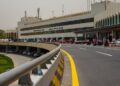
Drone strikes targeted the US embassy in Riyadh on Tuesday as drone strikes intensified across the Middle East in the aftermath of the killing of Iran’s supreme leader last week. The incident marked a sharp escalation in the regional conflict that now includes attacks in Saudi Arabia, Iraq and the Gulf.
AFP reporters documented smoke damage at the US diplomatic compound while regional governments issued new security alerts and military deployments.
The escalation follows four days of US and Israeli strikes and comes as Washington urges all American citizens to leave the region immediately.
Drone strikes hit US embassy amid heightened Saudi security
Saudi authorities tightened security around the diplomatic quarter in Riyadh after two drones penetrated air defences and struck the US embassy, causing a fire. Police checkpoints blocked several roads, and officers inspected IDs at every entrance.
Saudi Arabia said it intercepted eight additional drones over two cities including Riyadh, part of a broader wave of Iranian strikes on regional targets.
Residents reported explosions across the capital as emergency teams worked to contain the fire at the embassy.
Iran targets industrial and diplomatic sites across region
Overnight, powerful explosions shook Tehran as fighter jets circled the city. Iranian officials accused the US and Israel of escalating the war while Washington warned of prolonged operations that could last “weeks or months”.
Iranian attacks also hit oil and gas facilities in Gulf cities including the Omani port of Duqm, pushing Brent crude prices higher. In Fujairah in the UAE, debris from intercepted drones caused a fire at an oil site.
Strikes reach Iraq as Kurdish opposition camp targeted
Iranian drone strikes also hit northern Iraq, where the Kurdistan region hosts Iranian Kurdish opposition groups.
Local official Tareq al‑Haidari confirmed that three drones struck the Azadi camp in Koysinjaq. One drone hit the camp hospital, injuring one person.
PDKI commander Mohammed Nazif Kader said drones and missiles targeted the camp, accusing Iran of conducting cross-border strikes on opposition groups.
These groups, designated by Iran as terrorist organizations, have long operated from Iraq. Although largely inactive militarily in recent years, several formed a coalition last week seeking political change in Iran.
Pro‑Iran fighter killed in strike on Iraqi base
Separately, an Iran‑backed fighter from Kataeb Hezbollah was killed in a strike on the group’s Jurf al‑Nasr base south of Baghdad. The base has been targeted multiple times since the conflict began. A faction source said one fighter was killed and another wounded.
Israel expands operations in southern Lebanon
Israel announced it had seized new forward positions in southern Lebanon after Hezbollah fired missiles in support of Iran. Israeli Defense Minister Israel Katz said the military had been authorized to capture additional “strategic positions” near the border.
A Lebanese military source said the army had redeployed its forces in the south while Hezbollah claimed strikes on three Israeli bases.
Washington defends “pre‑emptive” action
US Secretary of State Marco Rubio said the United States launched its initial attacks after learning Israel planned to strike Iran. Rubio claimed Iran was preparing to target US forces, framing the operation as pre‑emptive.
Democratic lawmakers questioned the justification, calling it unprecedented for the United States to enter a war based on another country’s expected actions.
Iran’s Foreign Minister Seyed Abbas Araghchi dismissed Rubio’s comments, saying the US had entered a “war of choice on behalf of Israel”.
Rising casualties and fear across Iran
The US Central Command reported six American personnel killed since the conflict began. Iranian media reported hundreds of casualties inside Iran, though AFP could not verify the numbers.
HRANA reported 101 Iranian deaths on the third day of the war, including 85 civilians.
In Tehran, residents described a mix of fear and uncertainty as airstrikes continued. Some prepared to leave the city while others expressed hope that the government might face mounting internal pressure.
Conclusion:
With drone strikes expanding across the Middle East and diplomatic tensions intensifying, regional governments continue to brace for further escalation. The conflict has already reached Saudi Arabia, Iraq, Lebanon, and the Gulf, underscoring the risk of a prolonged and unpredictable war.