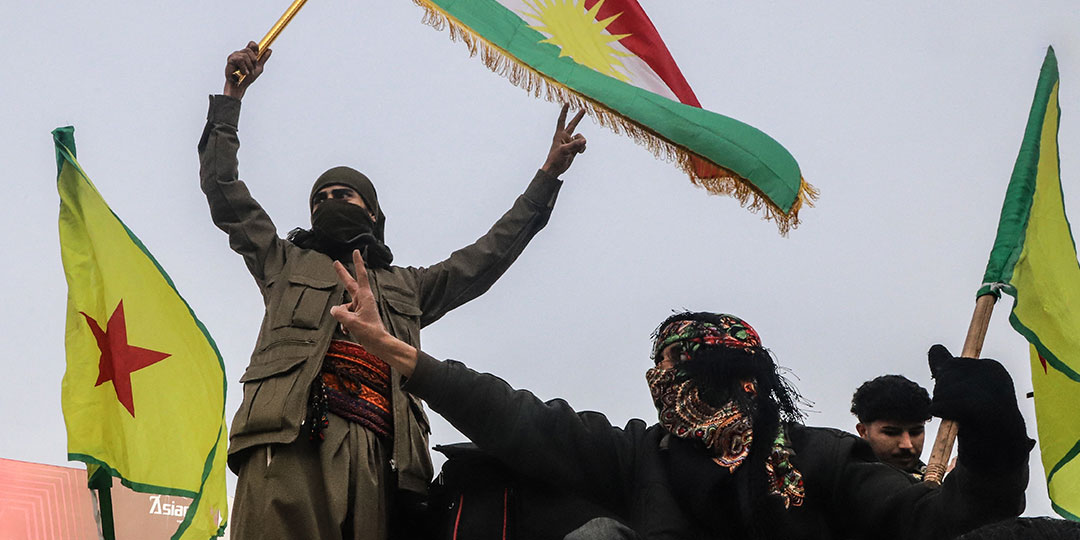

The Syrian government and the Syrian Democratic Forces (SDF) announced on Friday a “comprehensive” agreement to integrate the Kurdish self-administration’s civil and military institutions into the Syrian state. The development has been described by Washington as a “historic milestone.”
This agreement follows a ceasefire that began on January 20, ending weeks of tensions and clashes which resulted in the SDF losing control over large areas in northern and eastern Syria to advancing government forces.
Details of the Agreement
The new accord stipulates the “withdrawal of military forces from contact lines and the entry of security forces affiliated with the Ministry of Interior into the centers of Hasakah and Qamishli.” SDF Commander Mazloum Abdi confirmed that the agreement “will be practically implemented on February 2nd,” clarifying that a “limited security force” will enter the two cities while emphasizing that “no military forces will enter any Kurdish city or village.”
The agreement also includes forming a military division within the Syrian army in the country’s northeast, composed of three brigades of SDF fighters. Additionally, a special brigade for Kobani (Ain al-Arab) forces will be established within a government military division in the north. According to published details, the agreement aims to “unify Syrian territories.”
Regarding civil institutions, a government source told state television that Damascus will assume control of “all civil and government institutions, crossings, and ports.” Meanwhile, Abdi noted that self-administration employees “will remain in their jobs and be integrated into the relevant government ministries.”
International Reactions
The agreement has received widespread international welcome. The U.S. Envoy to Syria, Tom Barrack, described it as a “deep and historic milestone in Syria’s path towards national reconciliation.” The European Union also welcomed the move, calling for its implementation “in good faith and consensus,” and stressing the need to “ensure the security of camps and detention centers and prevent the return of the Islamic State organization.”
French President Emmanuel Macron congratulated Syrian President Ahmed al-Sharaa and General Mazloum Abdi on the agreement, affirming that France “will support its full implementation” and that it supports a “sovereign, unified, and stable Syria.”
Background and Future Challenges
The Syrian Democratic Forces, with American support, played a pivotal role in the fight against the Islamic State organization, controlling vast territories in northern and eastern Syria. Following the fall of Bashar al-Assad’s regime in 2024, the new Syrian authorities declared their intent to unify the country under their authority, ending Kurdish hopes of maintaining an independent self-administration.
In the city of Qamishli, residents’ opinions were divided. Some believe the agreement will spare the region from war, while others expressed distrust in the new government and voiced concerns over the lack of clarity regarding the future administration of the area.