
A Colombian military Hercules transport aircraft carrying 125 troops and crew crashed Monday shortly after takeoff from Puerto Leguizamo near the southern border with Ecuador, resulting in at least 8 confirmed deaths and over 80 injuries according to government officials. The C-130 Hercules aircraft, marked FAC 1016, went down in the Amazon jungle region following departure from the southern outpost that serves as base for military operations targeting drug-trafficking cartels and armed militias active in the troubled border area. Regional governor Jhon Gabriel Molina announced the death toll in a video statement, noting that investigators were examining the cause of the crash. The incident represents the second major C-130 Hercules crash in South America within one month, following a Bolivian military cargo aircraft crash on February 27 that killed at least 24 people.
The crash occurred during intensified military operations in the Colombia-Ecuador border region as both nations’ armed forces conduct operations against drug-trafficking organizations and armed groups operating in the remote jungle territory.
Hercules Aircraft Crashes Shortly After Takeoff
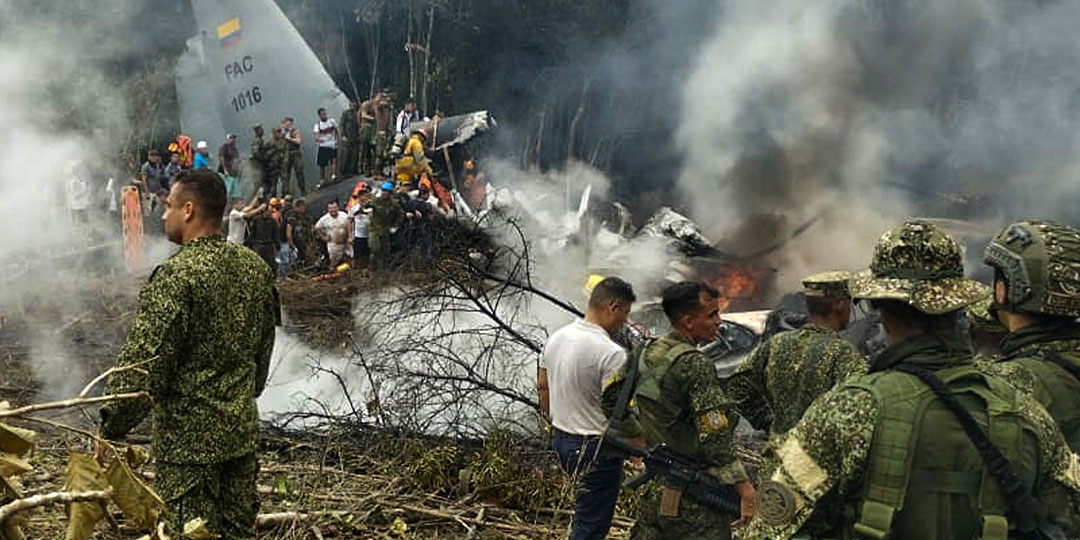
The Colombian military Hercules C-130 transport aircraft crashed shortly after departing Puerto Leguizamo airport Monday, with imagery from the crash site showing civilians gathered around burning wreckage strewed across the jungle floor. The aircraft was operating between Puerto Leguizamo and another Amazon military outpost nearby when the incident occurred.
The crash scattered burning debris across the jungle terrain, with smoke and flames visible above the forest canopy. Images identified the aircraft as FAC 1016, a Lockheed Martin C-130 Hercules transport plane widely used by militaries worldwide for troop transport and cargo operations.
Crash Location and Operational Context
Puerto Leguizamo serves as military base for Colombian operations against drug-trafficking cartels and armed militias active in the remote Putumayo region near the Ecuador border. The area has experienced heavy military activity in recent weeks as Colombian and Ecuadorian militaries escalate operations to combat illicit drug production and armed group activity.
The jungle terrain surrounding the crash site complicated rescue and recovery operations, with military units mobilized to reach the wreckage location and conduct casualty evacuation.
Casualty Figures Remain Uncertain
Government officials announced 8 confirmed deaths and over 80 injured in the crash, though initial reports from military sources indicated potentially higher casualties. Regional governor Molina stated that investigators were examining the cause of the crash as rescue operations continued.
Initial reports from a military source indicated that up to 80 people may have been killed, though this figure was not officially confirmed by government authorities. The discrepancy between initial military assessments and official government announcements reflects ongoing casualty verification process from the remote crash site.
Rescue and Recovery Operations
Colombian military units rapidly mobilized to the crash site to conduct rescue operations and casualty evacuation. The remote jungle location complicated initial rescue efforts, with military personnel required to reach wreckage through difficult terrain.
Defense Minister Pedro Sanchez posted on social media that “military units are already at the scene,” indicating rapid deployment of rescue resources to the crash location. Sanchez expressed “deep sorrow” over the disaster, characterizing it as “a deeply painful event for the country.”
Aircraft Manifest and Personnel
General Carlos Fernando Silva Rueda stated that the Hercules aircraft carried 114 troops and 11 crew members, totaling 125 personnel aboard at time of crash. The personnel were traveling between Puerto Leguizamo and another Amazon outpost as part of ongoing military operations in the region.
The high number of military personnel aboard reflects the substantial military presence required for drug-trafficking suppression operations in the remote jungle border region.
Military Operations Context
The personnel aboard the crashed aircraft were part of Colombian military operations against drug-trafficking cartels and armed militias active in the Putumayo region. The heavy concentration of troops reflects the scale of military mobilization required for operations in the remote jungle terrain against organized criminal and armed group threats.
Lockheed Martin Hercules Aircraft Characteristics
The Hercules C-130 is a four-engine turboprop transport aircraft manufactured by Lockheed Martin, renowned for its ability to operate from makeshift and unprepared airstrips in remote locations. The aircraft’s versatility makes it widely used by militaries worldwide for troop transport, cargo operations, and humanitarian missions.
The Hercules aircraft design enables operation from primitive airstrips without sophisticated infrastructure, making it ideal for military operations in remote jungle regions with limited airport facilities.
Aircraft Design and Operational Capabilities
The C-130 Hercules can transport troops, vehicles, and cargo, with cargo capacity enabling transport of military equipment and supplies to remote operating bases. The aircraft’s reliability and operational flexibility have made it standard equipment for military operations worldwide.
The choice of Hercules aircraft for Amazon region operations reflects the need for transport capability from primitive airstrips lacking standard airport infrastructure available in developed areas.
Second Major C-130 Crash in South America
The Colombian crash represents the second major C-130 Hercules crash in South America within one month. A Bolivian military cargo aircraft carrying banknotes crashed while landing near La Paz on February 27, resulting in at least 24 deaths.
The frequency of major military aircraft crashes in South America raises questions about maintenance standards, pilot training, and operational safety procedures for aircraft operating in challenging jungle and mountain environments.
Regional Aircraft Safety Concerns
The occurrence of two major C-130 crashes within one month in South America suggests potential systemic issues affecting military aviation operations in the region. Operating conditions in remote jungle and high-altitude mountain regions present challenges to aircraft maintenance and pilot operations.
Regional Security Operations Context
The crash occurred during period of intensified military operations in the Colombia-Ecuador border region as both nations’ armed forces conduct operations against drug-trafficking organizations and armed groups. The remote jungle location of operations requires extensive use of military transport aircraft to maintain supply lines and rotate personnel.
The Putumayo region has been focal point of drug-trafficking operations, with Colombian and Ecuadorian militaries conducting joint and coordinated operations to suppress illicit drug production and armed group activity.
Drug-Trafficking Suppression Operations
Colombian and Ecuadorian military operations in the border region target major drug-trafficking cartels and armed militias engaged in cocaine production and trafficking. The operations require sustained military presence in remote jungle areas with limited infrastructure, relying heavily on military aircraft for transport and logistics.
Government Response and Investigation
Defense Minister Pedro Sanchez indicated that military units were mobilized to the crash site and that investigators were examining the cause. Sanchez’s statement that “the number of victims and the causes of the crash have not yet been confirmed” indicated that casualty verification and cause determination were ongoing.
Regional governor Molina’s announcement of the death toll in a video statement indicated government commitment to transparent casualty reporting despite the ongoing investigation.
Key Incident Details:
- Hercules C-130 transport aircraft crashes near Puerto Leguizamo
- 125 troops and crew aboard aircraft
- 8 confirmed deaths, over 80 injured reported
- Aircraft marked FAC 1016
- Crash occurred shortly after takeoff
- Remote Amazon jungle crash site
- Military units mobilized to crash scene
- 114 troops and 11 crew members aboard
- Second C-130 crash in South America in one month
- Bolivian military aircraft crashed February 27 with 24+ deaths
- Lockheed Martin four-engine turboprop design
- Aircraft used for drug-trafficking suppression operations
- Colombia-Ecuador border region security operations