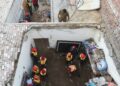
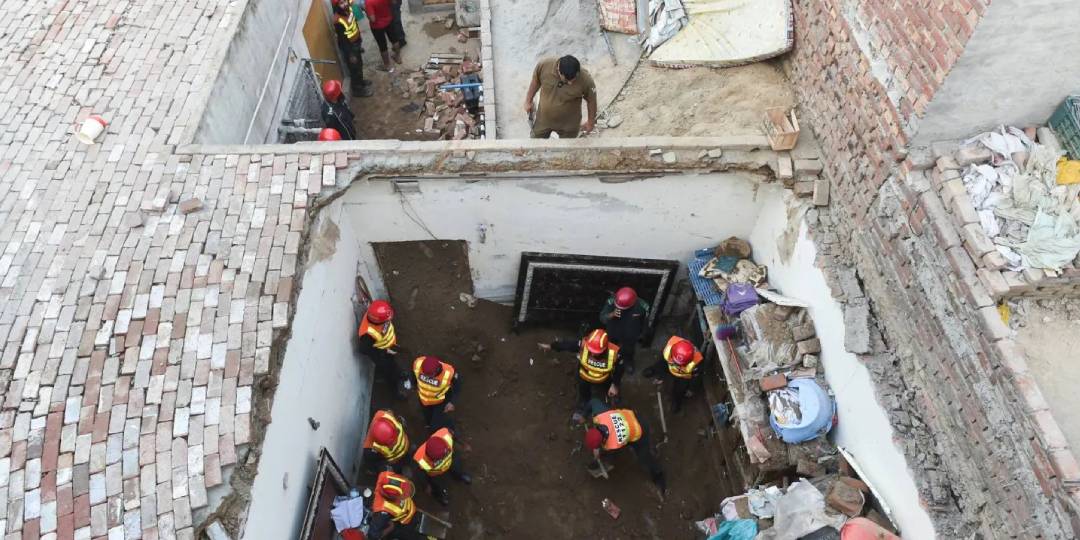

A catastrophic structural failure struck a private primary academy in the Dir Colony neighborhood of Peshawar on Thursday, October 15, 2026. The devastating school roof collapse in Peshawar claimed the lives of 28 people, including 27 school children and their female teacher, while leaving more than forty other students and staff members injured as heavy concrete and masonry gave way directly over crowded classrooms.
First responders, police officers, and neighborhood volunteers rushed to the dense residential enclave in the provincial capital of Khyber Pakhtunkhwa to extract young victims buried under heavy slab fragments. Emergency ambulances transported the injured to local medical facilities, where specialized trauma surgeons operated around the clock to treat severe head wounds and compound fractures.
Initial casualty reports fluctuated rapidly through the morning as urban search and rescue teams used hydraulic cutting gear to search through the debris. Lady Reading Hospital, the primary medical complex in the city, confirmed that arriving ambulances brought dozens of critical trauma cases, resulting in a climbing death toll as rescue workers cleared the lower level of the collapsed building.
Casualty Escalation and Hospital Response to the School Roof Collapse in Peshawar
Officials at Lady Reading Hospital confirmed the scale of the tragedy as casualties arrived from the Dir Colony area. Hospital spokesperson Asim Khan told reporters that emergency rooms handled dozens of casualties within hours of the collapse, confirming 28 fatalities, with more than thirty surviving patients admitted for extended care, including six children who remain in critical condition in intensive care units.
Capital City Police Officer Dr. Mian Saeed confirmed that total injuries surpassed forty people across the neighborhood. Police cordoned off surrounding alleys to maintain clear routes for medical evacuation convoys navigating narrow suburban streets, while district authorities mobilized cranes, excavators, and mechanical jacks to lift concrete slabs off the classroom floor.
Chronology of Official Casualty Bulletins
– Initial Emergency Report: First responders confirmed four fatalities on scene and transported twenty injured children to regional clinics.
– Second Operational Update: Hospital registries documented 17 and later 21 children dead as heavy machinery reached lower debris layers.
– Final Casualty Confirmation: Lady Reading Hospital confirmed 28 dead, consisting of 27 school children and one teacher.
– Critical Ward Status: Six children remain under specialized neurological care following traumatic crush injuries.
Search and Rescue Operations in Dir Colony
Rescue workers faced severe physical challenges as they worked through the collapsed building. The private school, situated in a densely built residential neighborhood, featured narrow access roads that hindered large firefighting trucks and heavy motorized earth-movers from reaching the site immediately, forcing rescue crews and local residents to clear broken brickwork and twisted metal rebar by hand.
Paramedics set up a field triage center nearby to administer emergency oxygen and stabilize concussed children before transferring them to regional hospitals. Community members joined rescue workers, forming bucket lines to remove loose rubble and debris while calling out for survivors trapped under fallen structural supports.
Challenges Confronting Emergency First Responders
– Narrow residential alleyways preventing direct access for heavy mechanical cranes.
– Excessive weight of unreinforced concrete roofs requiring manual hydraulic spreaders.
– Large crowds of distressed family members gathering around the perimeter searching for missing children.
– Simultaneous transit of dozens of trauma patients through congested urban traffic corridors.
Structural Integrity Concerns and Official Inquiries
Provincial authorities in Khyber Pakhtunkhwa ordered an immediate, high-level technical inquiry to determine what caused the sudden structural failure. Engineering specialists are reviewing whether long-term maintenance neglect, unauthorized building modifications, or substandard construction materials contributed to the collapse.
The disaster has reignited scrutiny regarding construction standards and regulatory safety oversight for private educational academies across Pakistan. Civil society organizations and parents’ groups have renewed calls for mandatory structural engineering audits of all primary school facilities, particularly schools housed in adapted residential structures within high-density municipal zones.
Conclusion:
The catastrophic school roof collapse in Peshawar stands as a profound human tragedy that has devastated families across Khyber Pakhtunkhwa. As emergency medical teams work to treat injured survivors and community members mourn the children and teacher lost in the disaster, provincial authorities face mounting demands to hold negligent operators accountable and enforce strict building safety codes across all educational institutions.