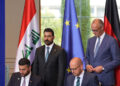

Iraqi Prime Minister Ali Faleh Al-Zaidi is holding a roundtable meeting in Berlin on Tuesday with representatives of 30 German companies to discuss investment opportunities and economic cooperation between Iraq and Germany. The visit is part of Al-Zaidi’s official trip to Germany, aimed at expanding economic partnerships and strengthening cooperation in energy, infrastructure, and investment.
According to the Iraqi News Agency, the participating German companies have shown strong interest in investing in Iraq, while the roundtable is expected to explore broader investment partnerships and practical avenues for cooperation between the two sides.
Arrival in Berlin and Economic Talks
Signing the Guest Book
Upon arriving in the German capital, Al-Zaidi signed the guest book at the official reception. The Iraqi News Agency said the signing included a reference to the agreements expected to be signed between Iraq and the German government during the visit.
The formal welcome reflects the importance of the trip in the context of Iraq-Germany relations, especially in opening new paths for economic and technical cooperation.
German Companies Interested in Iraq
The reporter said the participating German firms expressed strong interest in investing in Iraq, giving the visit added momentum as the Iraqi government seeks high-quality investments in sectors such as energy, transport, industry, and technology.
Al-Zaidi Says Iraq Wants a Balanced Partnership With Germany
“Work Is the Language of the Future”
Speaking at a press conference with German Chancellor Friedrich Merz in Berlin, and as covered by the Iraqi News Agency, Al-Zaidi said Iraq and Germany share a strong relationship built on mutual respect, stressing that “work is the language of the future.” He said Germany is a trustworthy and loyal partner and that Iraq wants to build stronger economic bridges with Berlin.
He noted that Iraq has abundant resources and manpower, while it needs the technology, expertise, and equipment that Germany can provide. He said the partnership between the two countries will be “mutual and balanced, not one-sided.”
Diversifying Oil Export Routes
The prime minister said Iraq will export crude oil to Europe through Syria and Turkey and is seeking to diversify its export routes rather than remain dependent on a single corridor. He said this approach is part of a broader plan to broaden oil export options and raise production.
He also said Iraq and Germany share an interest in defusing tensions between Iran and the United States, adding that the crisis has hurt Iraq and the world because oil exports were disrupted, negatively affecting global markets.
Regional and Sovereignty Issues
Iraq Open to Europe and the United States
Al-Zaidi said Iraq is open to Europe and the United States, and that German companies are welcome to work in the country. He added that Iraq’s ties with Germany are deep and historical, and that Berlin serves as a meeting point and a place for resolving global disputes.
He said Iraq remains committed to a centrist foreign policy and rejects aggressive policies, reflecting his government’s desire to maintain a balanced international posture.
Foreign Detainees and the Kurdistan Region
Regarding foreign prisoners affiliated with ISIS in Iraq, Al-Zaidi said the matter belongs to the judiciary and that the government has no authority over it. He also stressed that the Kurdistan Region of Iraq is an essential part of the state and has its due rights under the constitution and the law.
The prime minister said Iraq’s security forces, in all their branches, are capable of protecting the country, and that this point has been discussed with the presidents of the United States, France, and Germany. He added that weapons will remain in the hands of the state and that the decision of war and peace belongs exclusively to it.
New Energy Cooperation Deal
Fourth Phase With Siemens
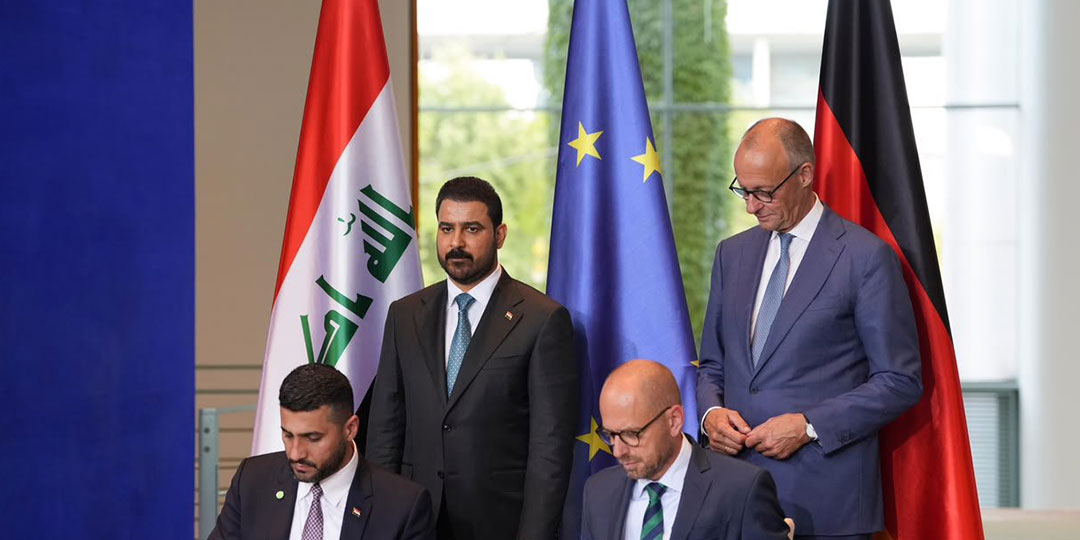
Al-Zaidi and German Chancellor Friedrich Merz also presided over the signing ceremony for the fourth phase of the Iraq Energy Cooperation Principles Agreement between the Ministry of Electricity and Siemens.
The Prime Minister’s Media Office said the ceremony was part of the current visit and lays the groundwork for a new stage of cooperation in Iraq’s energy sector, one of the key issues on the Baghdad-Berlin agenda.
Long-Term Economic Cooperation
The agreement reflects Iraq’s efforts to attract major German companies to help with energy and infrastructure projects, strengthening the state’s capacity for reconstruction, improving services, and boosting domestic production.
Conclusion:
Al-Zaidi’s visit to Berlin shows Iraq’s clear push to deepen its economic partnership with Germany by opening the door to German investment, signing new energy agreements, and discussing broader sovereign and economic issues. As Baghdad seeks to diversify oil export routes and attract technology and expertise, Iraq-Germany relations appear to be entering a deeper phase of cooperation.