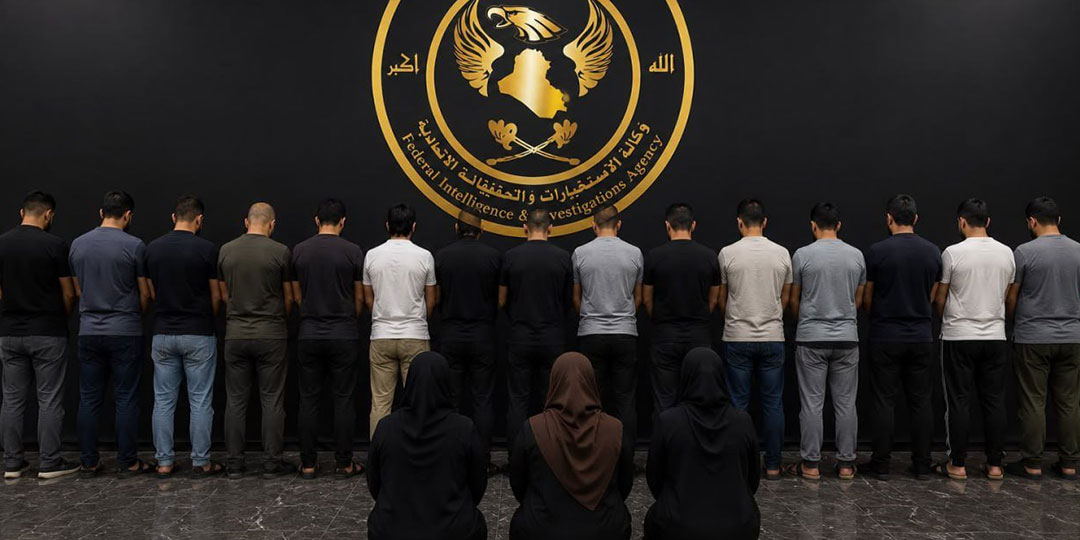

Iraq’s Interior Ministry said on Friday that it had dismantled three human trafficking networks, including an international ring involved in the illegal sale of human organs and the exploitation of victims through unlawful kidney sales.
In a statement, the ministry said the operation was carried out under judicial supervision and followed extensive intelligence work. It added that several suspects were arrested and evidence was seized linking them to criminal activity.
Details of the operation
The ministry said the Federal Intelligence and Investigations Agency’s anti-human-trafficking directorate dealt a “major security blow” to three criminal networks active in human trafficking.
According to the statement, one of the networks specialised in organ trafficking and exploited victims by arranging illegal kidney sales.
The operation was based on verified intelligence, field surveillance and judicial approvals, and was conducted through simultaneous security raids.
Suspects referred to the courts
The ministry said all defendants were referred to the competent judiciary for legal action, but did not disclose the number of arrests or additional operational details.
It said the operation reflects Iraq’s continuing efforts to pursue organised crime networks and prevent the exploitation of vulnerable people.
Broader crackdown on organised crime
The Interior Ministry said it remains determined to pursue organised crime groups, cut off their sources of activity and confront anyone who tries to trade in human dignity or exploit need.
The announcement comes as Iraqi authorities say they are intensifying efforts against trafficking, smuggling and other forms of organised criminal activity.
More than 20,000 personal weapons registered in July
In a separate announcement, the ministry released its July 2026 statistics for the National Iraqi Weapons Bank, part of efforts to regulate firearms and keep them under state control.
Brigadier General Mansour Ali Sultan, assistant undersecretary for police affairs and secretary of the committee responsible for restricting arms to the state, said the figures included seized weapons, ammunition and explosives, as well as weapons registered by citizens and visitors to state institutions.
Seizures and registration figures
According to the statistics, authorities seized 2,797 weapons of various types and 16,616 rounds of ammunition of different calibres.
They also confiscated 325 rockets and grenades and 1,072 explosive materials of different kinds as part of the state’s weapons-control campaign.
Civilian registrations and ministry withdrawals
Sultan said 2,106 weapons were registered for visitors to state institutions, most of them handguns, including those carried by airport visitors.
He added that 293 light weapons were withdrawn from civilian ministries, while 20,792 personal light weapons were registered by citizens at weapons registration offices.
Conclusion:
The Interior Ministry’s latest announcements, from dismantling three human trafficking networks to seizing thousands of weapons and ammunition, underscore Iraq’s continued push to confront organised crime and tighten state control over firearms.