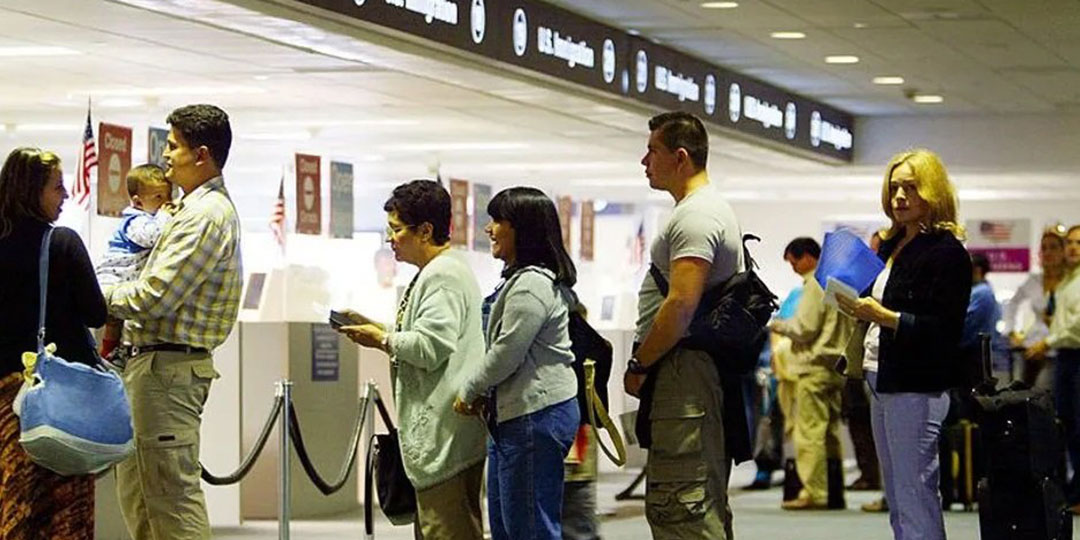

A US federal judge has ruled that a series of Trump immigration policies affecting migrants from 39 countries were unlawful, ordering their cancellation. The decision concerns measures that halted decisions on asylum claims, work permits, permanent residency applications, and naturalization requests.
The ruling was issued by Judge John McConnell Jr., Chief Judge of the US District Court in Rhode Island, who found that the policies placed thousands of migrants in prolonged legal limbo without proper legal justification.
Court Finds Policies Lacked Legal Authority
Judge McConnell overturned procedures implemented by US Citizenship and Immigration Services (USCIS), stating that the agency left applicants from dozens of countries in Africa, Asia, Latin America, and the Middle East in an undefined legal status for months.
According to the ruling, migrants complied with procedures established by Congress and existing regulations. However, the agency failed to issue decisions on their applications.
The judge concluded that the policies were adopted without sufficient legal or regulatory authority and were influenced by considerations that are not permitted to affect administrative decision-making.
He described the actions as unlawful, arbitrary, and capricious under federal law.
Lawsuit Filed by Migrant Advocacy Groups
The decision followed a lawsuit filed in March by a coalition of immigrant advocacy organizations and labor unions.
The plaintiffs argued that the policies exceeded the legal authority of USCIS, which operates under the US Department of Homeland Security.
The ruling is seen as a legal victory for migrant rights groups challenging the administration’s restrictive immigration measures.
Background of the Policy Measures
The immigration policies were introduced as part of a broader crackdown following a shooting incident last November in Washington, DC, in which two National Guard members were targeted. The suspect was reported to be an Afghan migrant.
Following the incident, former President Donald Trump pledged to halt immigration from what he described as third-world countries and expanded the list of nations subject to full or partial travel restrictions.
Countries affected by full travel bans included:
– Afghanistan
– Iran
– Haiti
– Somalia
– Venezuela
– Syria
The administration justified the measures on national security and enhanced vetting grounds.
Broader Legal and Political Implications
The ruling may reopen thousands of suspended applications and could prompt an appeal by federal authorities.
It also reignites debate in the United States over the balance between executive authority and judicial oversight in immigration policy.
Observers note that immigration remains a deeply contested issue in US politics, particularly regarding national security and humanitarian protections.
Conclusion:
The federal court’s decision striking down Trump immigration policies marks a significant development in the ongoing legal battle over US immigration measures. By declaring the policies unlawful, the ruling could have immediate implications for migrants from 39 countries whose applications had been suspended.