
Hezbollah announced targeting an Israeli military headquarters in Bayyada and launching a wide artillery and rocket barrage against Israeli army positions in the town. The group said the attack was in response to what it described as Israeli violations of the ceasefire and strikes on southern Lebanese villages. Meanwhile, Israeli forces carried out airstrikes and artillery shelling across multiple towns in southern Lebanon, as the death toll since March surpassed 3,100.
The developments signal continued escalation along the Lebanese-Israeli frontier.
Hezbollah launches artillery and rocket barrage
In a statement, Hezbollah said its fighters carried out a large-scale artillery and rocket attack between 19:00 and 19:30 on Saturday, May 16, 2026, targeting Israeli army positions in Bayyada.
The group described the operation as defensive and in response to Israeli ceasefire violations.
Details of the operation
- Targeted Israeli military positions in Bayyada
- Used artillery shells and multiple rocket salvos
- Conducted within a 30-minute timeframe
- Part of ongoing retaliatory operations
Drone strike on Israeli command headquarters
In a separate statement, Hezbollah said it targeted an Israeli command headquarters in Bayyada at 19:15 using an attack drone.
The group claimed the strike achieved a “confirmed hit.”
The operation reflects the expanded use of drones in the ongoing confrontation.
Objectives of the strike
- Disrupt Israeli field command operations
- Demonstrate deterrence capability
- Respond to Israeli airstrikes
- Escalate pressure on frontline positions
Israeli airstrikes and artillery shelling across southern Lebanon
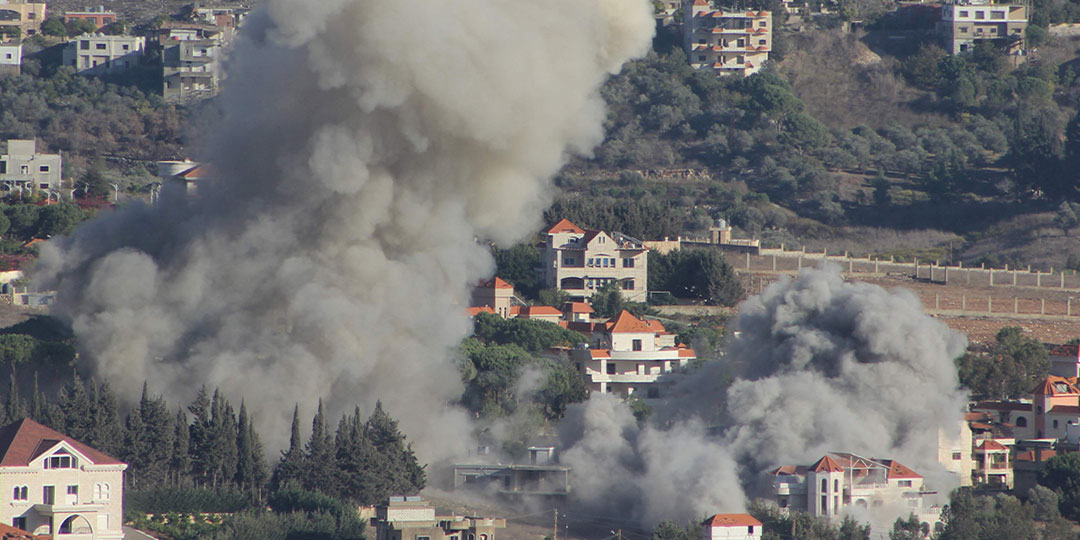
According to Lebanon’s National News Agency, Israeli warplanes conducted airstrikes between Kafra and Yater in the Bint Jbeil district.
Air raids also targeted the towns of Al-Ghandourieh and Haris.
Simultaneously, artillery shelling struck Rashaf, Haddatha, Toulene, Qabrikha, Al-Sawwana, Jebsheet, Adshit, Qaqqaiyat al-Jisr, Zawtar al-Sharqiya, Mefdoun, and Nabatieh al-Fawqa.
Geographic spread of attacks
The shelling affected:
- Multiple villages near the border
- Residential and semi-urban areas
- Strategic highland positions
- Areas across Nabatieh district
Casualty toll rises to 3,111
Lebanon’s Ministry of Health reported that the total number of fatalities resulting from Israeli attacks since March 2 has reached 3,111, with 9,432 injured.
The figures indicate sustained and high-intensity hostilities.
Humanitarian implications
- Significant civilian casualties
- Increased pressure on hospitals
- Displacement of border communities
- Extensive infrastructure damage
Escalation despite ceasefire framework
The exchange of attacks comes despite previous ceasefire arrangements aimed at reducing tensions.
Hezbollah accuses Israel of breaching the truce, while Israel continues conducting operations in southern Lebanon.
The situation highlights the fragility of de-escalation efforts.
Risks of further escalation
- Broader geographic expansion of strikes
- Increased cross-border missile exchanges
- Greater regional involvement
- Heightened risk of prolonged conflict
Regional security implications
The renewed escalation in southern Lebanon coincides with broader regional tensions.
International observers have expressed concern about the humanitarian and security consequences if hostilities intensify further.
Conclusion:
Hezbollah’s announcement that it targeted an Israeli headquarters in Bayyada coincides with intensified Israeli airstrikes and artillery shelling across southern Lebanon. With the reported death toll exceeding 3,100 since March, the confrontation shows no immediate signs of de-escalation. As both sides continue military operations and exchange accusations of ceasefire violations, the risk of a wider escalation remains a pressing concern for regional stability.