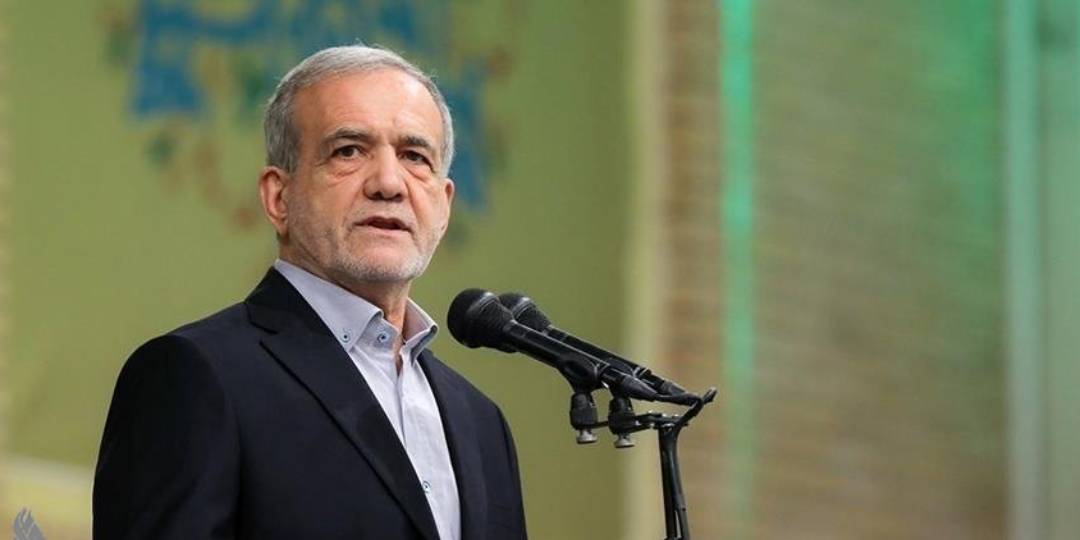

Iranian President Masoud Pezeshkian expressed today gratitude to Grand Ayatollah Ali Sistani for his generous support to those suffering from recent aggression against Iran. Pezeshkian appreciated “the solidarity of the brotherly Iraqi people” with Iran. The Iranian president’s statement via X platform reflected deep recognition of the religious authority’s humanitarian and religious role supporting the oppressed.
The statement reflects the genuine depth of Iranian-Iraqi relations.
Pezeshkian thanks Grand Ayatollah Sistani
Pezeshkian tweeted: “I raise the highest expressions of gratitude for the generous support offered by Grand Ayatollah Sistani (may his shadow endure) to the Islamic Republic of Iran and those suffering from recent aggression.”
The Iranian president expressed “deep appreciation” for the religious authority’s position.
The thanks acknowledged the religious leadership’s humanitarian support role.
Dimensions of Iranian gratitude
The thanks encompassed:
Appreciation for generous religious authority support
Recognition of its stance toward Islamic Republic
Valuing its support for aggression victims
Praise for its humanitarian and religious role
Appreciation for Iraqi people’s solidarity
Pezeshkian praised “the solidarity of the brotherly Iraqi people.”
This appreciation expressed:
Recognition of Iraqi support for Iran
Valuing Iraqi public positions
Commending brotherly relations
Gratitude for humanitarian solidarity
Political implications of solidarity
Iraqi people’s solidarity reflects:
Genuine popular support for Iran
Deep relations between peoples
Shared positions against aggression
Islamic and humanitarian solidarity
Role of the supreme religious authority
Pezeshkian affirmed that “the religious authority has always been an impregnable fortress and steadfast support for the oppressed.”
This assessment reflected:
Historical role of the religious authority
Its continued defense of the oppressed
Unwavering humanitarian and religious stance
Its role as guardian of justice and rights
Historical context of the authority
The religious authority represents:
Recognized supreme religious authority
Its role defending rights
Steadfast position against injustice and aggression
Spiritual and practical leadership
Siege and aggression against Iran
The thanks came within context of:
Recent aggression against Iran
Suffering of Iranian populations
Need for humanitarian and financial support
International and regional solidarity
Humanitarian effects of aggression
The aggression requires:
Urgent humanitarian support
International and regional solidarity
Aid for victims
Reconstruction and rehabilitation
Deep Iranian-Iraqi relations
Pezeshkian’s statements reflect:
Depth of bilateral relations
Solidarity in crises
Mutual support
Shared positions against injustice
Religious and cultural dimensions
Relations include:
Religious and Islamic similarities
Shared religious references
Shared civilizational depth
Complex but unified political history
Religious authority’s position on aggression
The position reflects:
Clear rejection of aggression
Support for victims
Genuine humanitarian solidarity
Clear moral and religious stance
Religious authority’s crisis role
The authority plays:
Role of rights protector
Advocate for the oppressed
Unifier of ranks
Supporter of solidarity
Iranian message to world
Pezeshkian sends message:
To thank religious authority and Iraqi people
To affirm genuine depth of relations
To demonstrate popular and religious solidarity
To remind importance of unity
Future and cooperation
Solidarity may lead to:
Deeper bilateral cooperation
Mutual support in crises
Better political coordination
Stronger regional position
Recent developments and expectations
Within context of developments:
Continued US-Iran negotiations
Trump’s flexible yet firm position
Regional support for Iran
Popular and official solidarity
Hope for diplomatic solution
Hope strengthened by:
Trump’s statements on solution possibility
Regional support for Iran
Growing popular solidarity
Continued international initiatives
International dimension of solidarity
The solidarity gains importance through:
Supporting Iran diplomatically
Strengthening Iran’s negotiating position
Demonstrating regional backing
Enhancing Iran’s international standing
Strategic significance
The solidarity carries:
Political weight in negotiations
Moral and humanitarian dimension
Religious and cultural significance
Practical support implications
Coordination between Iran and Iraq
The statements suggest:
Coordination on regional issues
Unified stance toward aggression
Common diplomatic approach
Strategic partnership development
Regional stability implications
Iranian-Iraqi solidarity affects:
Regional balance of power
International relations
Peace and stability prospects
Future cooperation frameworks
Conclusion:
Iranian President Pezeshkian’s gratitude to Grand Ayatollah Sistani and appreciation for Iraqi people’s solidarity reflect the deep humanitarian and religious bonds between the two nations. The position emphasizes religious authorities’ role in defending the oppressed and humanitarian solidarity. The thanks came at significant timing preceding potential developments in US-Iran negotiations, reflecting the importance of regional and popular support for Iran in confronting current challenges. The statements underscore the genuine bonds transcending political differences and emphasizing shared Islamic and humanitarian values.