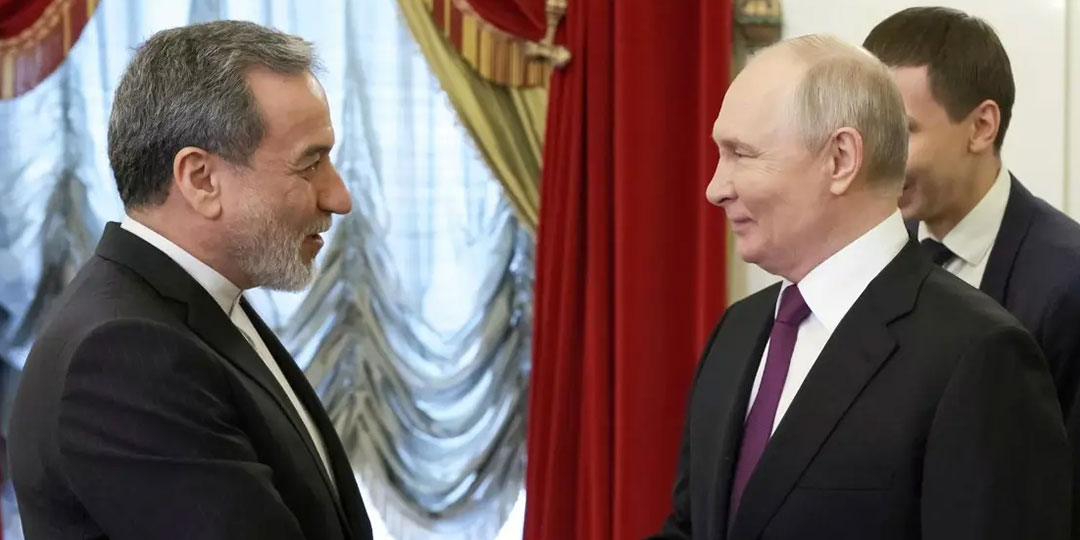

Iranian Foreign Minister Abbas Araghchi announced Monday that the United States offered Iran direct talks, with Tehran currently studying the proposal. The announcement came while Araghchi was in St. Petersburg, Russia, for a significant meeting with Russian President Vladimir Putin. Putin affirmed Russia’s commitment to doing everything within its power to ensure achieving peace in the Middle East as soon as possible. The convergence of direct American outreach and strong Russian backing represents an important development in diplomatic efforts to resolve the Iranian-American conflict.
Putin disclosed receipt of a message from Iran’s Supreme Leader Khamenei affirming the Iranian people’s courage and heroism in defending national sovereignty. Araghchi emphasized that the strategic partnership between Iran and Russia will continue, asserting that the conflict has demonstrated the strength and stability of Iran’s system. The developments reflect accelerating diplomatic movements toward potential conflict resolution with multiple international actors engaged.
Araghchi Confirms U.S. Offer of Direct Talks
Iranian Foreign Minister Abbas Araghchi made explicit confirmation of American engagement. According to TASS news agency, Araghchi stated: “The United States offered Iran direct talks.”
He added: “Tehran is currently studying this possibility,” indicating Iran has not yet made a final decision and wishes to review conditions and details thoroughly before responding.
Nature of American Offer
The offer reflects several significant elements:
- Source: Direct U.S. government overture
- Subject: Conduct of negotiations
- Iranian Position: Under study and evaluation
- Timing: Now, at a critical moment
- Implication: American desire for dialogue
Araghchi’s Visit to Russia and Meeting with Putin
Araghchi arrived in St. Petersburg Monday heading a high-level diplomatic delegation. Official Iranian media reported that Araghchi “arrived early Monday in St. Petersburg for the purpose of meeting Russian President Vladimir Putin and conducting talks with him.”
Objectives of Russian Visit
The visit established multiple objectives:
- Continuing Consultations: Between Tehran and Moscow
- Regional Issues: Discussion of Middle East developments
- International Issues: Global matters
- Bilateral Relations Enhancement: Strengthening mutual partnership
- War Discussion: Examining conflict developments with U.S.
Putin Affirms Russia’s Commitment to Peace
Russian President Vladimir Putin issued explicit commitment to resolution. Putin stated: “Russia will do everything in the interests of Iran and other countries in the region to ensure achieving peace in the Middle East as soon as possible.”
This statement reflects:
- Strong Russian commitment
- Support for Iranian position
- Regional stability desires
- Effective diplomatic efforts
Russian Support for Iran
Support encompasses multiple dimensions:
- Political: Favorable Russian positioning
- Diplomatic: Direct Russian engagement
- Strategic: Long-term partnership
- Regional: Stability support
- International: Russian influence application
Khamenei’s Message Putin Received
Putin referenced message from Supreme Leader. Putin stated: “I received a message from Iran’s Supreme Leader Khamenei last week.”
He continued: “The Iranian people are fighting with courage and heroism for their sovereignty.”
Message Content and Implications
The message conveyed:
- Courage: Affirmation of national strength
- Heroism: Recognition of Iranian sacrifices
- Sovereignty: National values emphasis
- Resistance: Steadfastness against pressure
- Independence: Rejection of foreign domination
Russian Hopes for Iran’s Future
Putin expressed Russian aspirations. Putin stated: “Russia hopes the Iranian people will overcome this difficult period and that peace will prevail in the country.”
He added: “We sincerely hope that the Iranian people, drawing inspiration from their courage and desire for independence, will overcome this difficult phase and peace will prevail.”
Russian Message to Iran
Russian hopes carry multiple messages:
- Solidarity: With Iranian people
- Optimism: For better future
- Support: Moral and political
- Understanding: Of Iranian pressures
- Partnership: Continued cooperation
Araghchi Affirms Iran’s Stability and Strength
Iranian Foreign Minister asserted system stability. Araghchi stated: “The Islamic Republic is stable and solid.”
He added: “War with the United States and Israel has shown the world Iran’s true strength. It is now clear that the Islamic Republic of Iran has a stable, solid, and strong system.”
Perceived Gains From Conflict
Iranian perspective identifies:
- Strength Demonstration: Proof of military capabilities
- System Stability: Stability despite pressure
- Cohesion: National and leadership unity
- Legitimacy: Strong and legitimate governance
- Deterrence: Effective defensive capacity
Continuance of Iranian-Russian Strategic Partnership
Araghchi emphasized ongoing partnership. He stated: “Russia stood alongside Iran, and the two countries will continue their strategic partnership.”
He added: “For us, Iranian-Russian relations represent a strategic partnership at the highest levels, and we will continue moving forward on this path.”
Nature of Strategic Partnership
The partnership encompasses:
- Level: Highest political levels
- Duration: Long-term commitment
- Commitment: Mutual and strong
- Fields: Military, economic, and political
- Future: Continued without interruption
Khamenei and Iranian President’s Greetings to Putin
Araghchi conveyed personal messages. He stated: “Supreme Leader Majid Khamenei and President Masoud Pezeshkian asked me to convey their best wishes to you.”
This reflects:
- Mutual personal respect
- Direct leader-to-leader communication
- Positive messaging
- Relationship enhancement desire
Significance of Russian-Iranian Meeting
Russian spokesman assessed importance. Dmitry Peskov stated: “The importance of this meeting is difficult to overstate given the developments on the Middle East regional stage.”
Meeting’s Multiple Implications
The meeting carries several meanings:
- Political: Strong Russian positioning
- Regional: Impact on developments
- International: Message to world
- Diplomatic: Real efforts underway
- Strategic: New alliance formations
Broader Diplomatic Context
These developments occur within wider context:
- Negotiations: Talks in Islamabad
- Mediation: Pakistan serving as mediator
- Regional States: Saudi Arabia and Oman participate
- International Actors: Russia supporting Iran
- Pressure: Continued American and economic pressure
Araghchi’s Recent Diplomatic Movements
Foreign Minister conducted intensive diplomatic tour:
- Pakistan: Meeting American emissaries
- Oman: Meeting Sultan of Oman
- Russia: Meeting with Putin
- Message Delivery: Conveying developments
Timeline and Momentum Building
The diplomatic trajectory shows accelerating momentum:
Recent Days:
- Pakistan-based negotiations
- Sultanate of Oman consultations
- Saudi Arabia discussions
- Russian Federation engagement
Current Status:
- U.S. direct talks offer
- Iranian study of proposal
- Russian strong support
- Multiple mediators active
Expected Future:
- Direct talks possibility
- Negotiation framework development
- International monitoring potential
- Peace pathway emergence
American Diplomatic Shift
U.S. willingness to offer direct talks represents notable shift:
- From Pressure: To negotiation opening
- Direct Engagement: Without intermediaries
- Flexibility: Recognizing stalemate
- Pragmatism: Understanding costs
- Opportunity: Window for resolution
Iranian Cautious But Serious Response
Iranian approach demonstrates:
- Study: Not immediate rejection
- Conditions: Likely requirements
- Consultation: With allies like Russia
- Legitimacy: International backing
- Strength: Negotiating from position
Conclusion:
The convergence of American direct talks offer, Iranian serious consideration, and strong Russian support represents potentially significant moment in Iranian-American conflict trajectory. Multiple diplomatic channels functioning simultaneously—Pakistan mediating, Russia supporting, Saudi Arabia and Oman consulting—indicate genuine international effort toward resolution.
Araghchi’s intensive diplomatic tour, Putin’s explicit commitment, and the Supreme Leader’s message collectively suggest that possibilities exist for meaningful negotiations. The Iranian insistence on studying the offer rather than immediate rejection leaves space for dialogue while preserving negotiating position.
Critical questions remain unanswered: Will Iran accept talks without preconditions? Will the U.S. offer substantive concessions? Can multiple international actors maintain coordinated efforts? Will negotiating frameworks prove acceptable to both sides? The coming days and weeks will prove crucial in determining whether this diplomatic opening leads to substantive progress or represents another incremental step toward eventual resolution.