
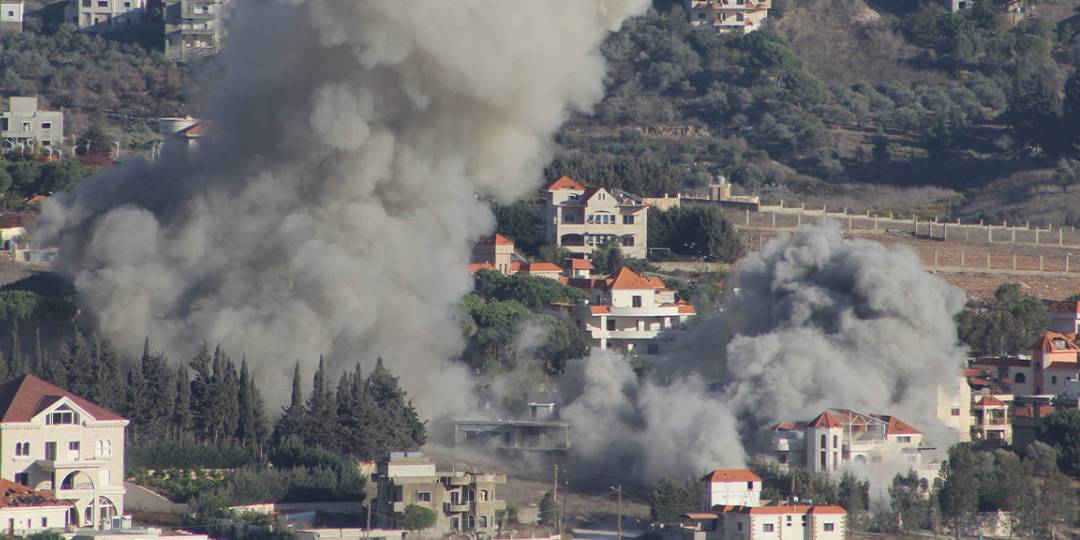

Israeli occupation forces continued military operations against southern Lebanese villages on Monday, marking further violations of the ceasefire agreement that commenced the previous week. Israeli warplanes conducted air raids on Tiri village in Bint Jbeil district and sent drone strikes against residential buildings in Burj Qalaoueh in the same district, according to Lebanese media reports. Additionally, occupation forces detonated multiple residential buildings in Shmea, Naqoura, and Biyadah villages in Tyre district overnight and into early morning hours. The continued military operations underscore the fragility of the ceasefire arrangement and raise fundamental questions about Israeli commitment to peace terms, while simultaneously, Israeli occupation forces escalated arrest operations in the West Bank, detaining over 52 Palestinians during widespread raids across multiple communities.
The military operations represent direct violations of the agreed ceasefire framework and demonstrate Israeli determination to maintain military presence and control in southern Lebanese territory despite peace agreement provisions.
Continued Military Operations in Southern Lebanon
Air and Drone Strikes Monday
Israeli warplanes conducted air raids targeting Tiri village in Bint Jbeil district, while Israeli unmanned drone aircraft struck residential buildings in Burj Qalaoueh village in the same district. The operations demonstrate continued Israeli air operations despite ceasefire agreement intended to halt military activities and establish conditions for subsequent diplomatic negotiations.
Residential Building Demolitions
Israeli occupation forces executed demolition operations against multiple residential buildings in southern Lebanese villages including Shmea, Naqoura, and Biyadah in Tyre district. The demolitions continued from nighttime hours through early morning periods, suggesting systematic targeting of civilian infrastructure rather than responses to immediate security threats.
Scope and Pattern of Violations
The succession of air raids, drone strikes, and demolition operations indicates pattern of Israeli military activity rather than isolated incidents, suggesting deliberate strategy to maintain military pressure and control despite ceasefire framework. The operations target civilian residential areas rather than military positions, raising humanitarian concerns regarding civilian population protection during supposed ceasefire period.
Israeli Restrictions on Civilian Movement
Movement Prohibition Warnings
Israeli occupation forces issued formal warnings to southern Lebanese civilian populations, prohibiting movement south of specified village lines and restricting approach to Litani River, Salhi Valley, and Suluqi areas. The restrictions encompass dozens of villages including Mziraa, Mejdel Zoun, Zebqine, Yater, Sarbin, Hadatha, Bayt Yahoun, Shaqra, Mejdel Salim, Qabricha, Faron, Zoutar al-Gharbiya, Yahmor al-Shaqif, Arnoun, Deir Mimas, Marjayoun, and Aabel Saqi.
Comprehensive Village Access Bans
The restrictions extend to comprehensive bans on civilian return to numerous villages including Biyadah, Shama, Tyer Harfa, Abu Shash, Al-Jbayn, Naqoura, Daheira, Matmoura, Yaroun, Um Tutah, Az-Zulutiah, Bustain, Sheikhin, Marouhin, Ramia, Bayt Lif, Salhanah, Aita al-Shaab, Hanine, Tiri, Rashaf, Yaron, Maroun ar-Ras, Bint Jbeil, Aynata, Kounine, Aytrun, Balida, Mahibb, Meis al-Jabal, Qalat Daba, Houla, Marka, Talouseh, Bani Hayan, Rabb at-Thalatheen, Al-Adaisah, Marjayoun, Kafr Kela, At-Tiba, Deir Sriyan, Qantrah, Almaan, and numerous other communities.
The comprehensive nature of the restrictions effectively prevents civilian return and reestablishment in southern Lebanon despite ceasefire agreement supposedly enabling civilian movement and return.
Israeli Restriction on Litani River Access
Strategic River Boundary Enforcement
Israeli forces specifically prohibit civilian approach to Litani River, establishing the waterway as de facto boundary between occupied and civilian-accessible territory. The Litani River represents strategically significant geographic boundary that Israeli forces have sought to maintain as separation line, contradicting assertions of Lebanese sovereignty and civilian freedom of movement in southern territory.
Associated Valley Restrictions
Beyond Litani River restrictions, Israeli forces prohibit access to Salhi Valley and Suluqi areas, creating buffer zones extending Israeli-controlled territory and further restricting Lebanese civilian access to southern portions of their homeland. The restrictions appear designed to create demilitarized zones under Israeli control rather than implementing neutral separation arrangements.
Broader Context of Israeli Occupation Practices
Pattern of Escalating Control
The continued military operations in Lebanon occur simultaneously with expanded arrest and detention operations in Palestinian territories, suggesting coordinated Israeli strategy to maintain and expand territorial control across multiple occupied regions. The dual operations indicate Israeli determination to preserve military advantage and civilian control regardless of ceasefire agreements or international expectations regarding occupation force behavior.
Systematic Displacement Strategy
The restrictions on civilian movement and return effectively implement forced displacement strategy that prevents southern Lebanese populations from reestablishing communities and reclaiming private properties. The comprehensive village bans and movement restrictions create conditions for long-term displacement and Israeli territorial consolidation.
West Bank Arrest Operations
Widespread Detention Campaign
Israeli occupation forces launched extensive arrest operations across West Bank communities on Monday, detaining over 52 Palestinians during raids on multiple municipalities. Operations in Hebron, Yatta, and Bayt Amr resulted in over 50 arrests, while Anabta east of Tulkarm experienced detention of dozens of Palestinians, predominantly recently released prisoners. Two Palestinians were arrested from Abuin village north of Ramallah.
Targeting of Released Prisoners
The arrest operations appear to specifically target recently released prisoners, suggesting Israeli strategy to re-detain individuals previously held in occupation prisons. The targeting of released prisoners indicates Israeli determination to maintain surveillance and detention systems regardless of previous imprisonment durations.
Pattern of Occupation Practices Across Territories
Systematic Settlement Expansion
Israeli occupation forces continue systematic settlement expansion practices including illegal construction of residential communities, expropriation of Palestinian lands and properties, and authorization of settler violence against Palestinian populations. The settlement projects represent long-term territorial consolidation strategy designed to maximize Israeli control over Palestinian territories.
Absence of International Enforcement
The continuation of Israeli occupation practices including arrests, settlement expansion, residential demolitions, and civilian restrictions occurs despite international law provisions and UN resolutions addressing occupation force obligations. The absence of effective international enforcement mechanisms enables Israeli continuation of practices without accountability.
Ceasefire Agreement Credibility Questions
Israeli Compliance Concerns
The continued military operations in Lebanon raise fundamental questions about Israeli commitment to ceasefire terms and subsequent peace negotiations. If Israeli forces maintain active military operations during ceasefire period, Lebanese confidence in Israeli willingness to honor final peace agreements necessarily declines.
Implications for Negotiation Process
The ceasefire violations undermine negotiation dynamics and reduce likelihood of achieving durable settlement. Lebanese authorities and international mediators must confront evidence that Israeli forces view ceasefire as tactical pause rather than genuine commitment to cessation of hostilities and conflict resolution.
International Response and Accountability
Documented Violations
International monitoring organizations and media outlets have documented Israeli military operations violating ceasefire terms, creating public record of Israeli non-compliance. Documentation through Lebanese media and international news agencies establishes factual basis for accountability mechanisms and diplomatic pressure.
Mediation Challenges
Pakistan and other diplomatic mediators face challenges addressing ceasefire violations while simultaneously negotiating broader conflict resolution. Israeli continuation of military operations during ceasefire period suggests that Israeli leadership may not prioritize conflict resolution despite negotiation participation.
Conclusion:
Israeli occupation forces continued military operations against southern Lebanon on Monday, including air raids, drone strikes, and residential building demolitions, representing clear violations of the ceasefire agreement initiated the previous week. Simultaneously, Israeli forces issued comprehensive restrictions on civilian movement and return, effectively implementing forced displacement strategy that prevents Lebanese populations from reestablishing communities in southern territories. These actions occur alongside escalated arrest operations in the West Bank where Israeli forces detained over 52 Palestinians during coordinated raids across multiple communities, demonstrating Israeli strategy to maintain and expand control across occupied territories regardless of ceasefire agreements or peace negotiations. The pattern of Israeli military operations and civilian restrictions raises fundamental questions about Israeli commitment to ceasefire terms and subsequent conflict resolution, while demonstrating Israeli determination to consolidate territorial control and maintain occupation practices despite international law provisions and negotiation frameworks. The continued violations underscore the fragility of ceasefire arrangements and suggest that durable conflict resolution will require mechanisms ensuring Israeli compliance and accountability for violations of agreed terms.