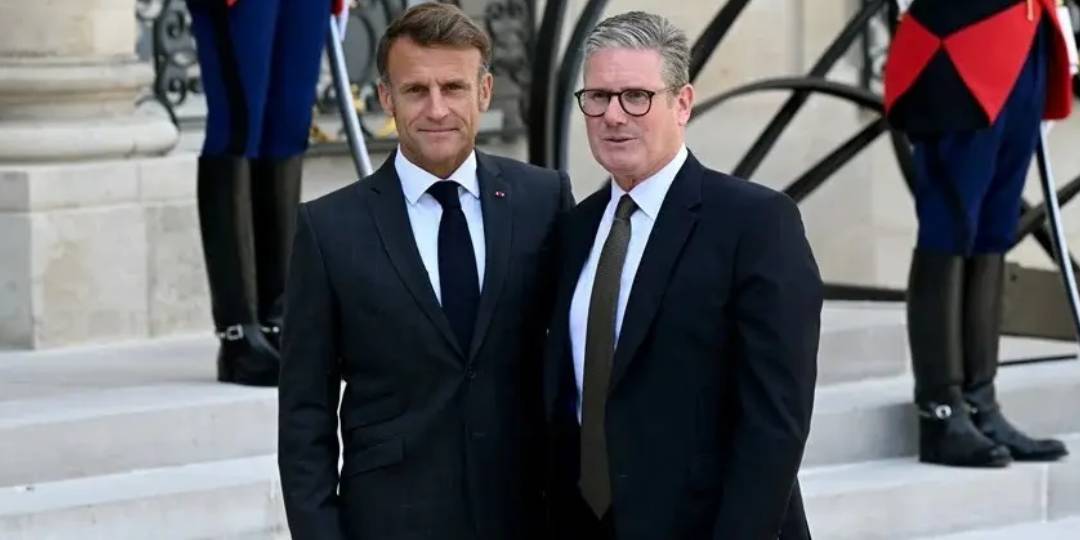

An international conference convened in Paris on Thursday under the sponsorship of French President Emmanuel Macron and British Prime Minister Keir Starmer, bringing together approximately 50 nations to discuss mechanisms for securing maritime passage through the strategically vital Strait of Hormuz. The conference addresses growing concerns regarding maritime disruptions following recent military operations and seeks to establish coordinated international solutions for ensuring freedom of navigation and commercial shipping continuity.
The gathering reflects broad international consensus on the critical importance of maintaining stable, secure passage through one of the world’s most vital maritime corridors. Participating nations aim to negotiate establishment of a multinational maritime security framework that transcends unilateral measures and promotes collaborative safeguarding of global trade routes essential to the world economy.
Preparatory Bilateral Meeting Between Macron and Starmer
French President Emmanuel Macron and British Prime Minister Keir Starmer held a bilateral meeting at the Élysée Palace prior to the broader international conference. The meeting enabled the two leaders to coordinate positions and establish a unified European stance before engaging with the wider international community.
This advance bilateral coordination underscores the priority both France and Britain place on the issue and demonstrates their intention to shape a collaborative European approach. Pre-conference alignment between major European powers signals intention to present a coherent European position in international maritime security discussions, according to reporting from Agence France-Presse.
Strategic Importance of European Coordination
Early European coordination reflects determination by the continent to play a central role in formulating comprehensive solutions addressing Strait of Hormuz security. Unified positioning between France and Britain demonstrates European recognition of the economic significance the passage holds for continental commerce and prosperity.
Europe’s proactive engagement in conference organization signals European intent to balance American military dominance in the region with diplomatic and multilateral frameworks reflecting broader international consensus. This approach seeks to transition from unilateral security measures to collectively endorsed international mechanisms.
Participation of Approximately 50 Nations
Approximately 50 nations are participating in the Paris conference, with leaders and government representatives joining both in person and via video communication. This extensive international attendance reflects genuine global concern regarding maritime disruptions and their cascading economic consequences for nations worldwide.
The broad representation across continents underscores that Strait of Hormuz security concerns extend far beyond the immediate region. Nations geographically distant from the passage remain directly affected through dependence on maritime trade flows and global energy supplies vulnerable to disruption.
Geographic and Political Diversity of Participants
Conference participants represent diverse geographic regions and political systems, including:
- European nations concerned about energy supplies and trade route stability
- Asian economies dependent on oil imports and maritime commerce
- African nations affected by energy costs and global inflation
- American states sharing interests in regional stability
- Middle Eastern nations with direct stakes in regional peace
Proposed Multilateral Maritime Security Force
Central to conference discussions is a proposal to establish an international multilateral military force dedicated exclusively to ensuring maritime security throughout the Strait of Hormuz. This force would assume responsibility for security operations, intelligence gathering, and military protection of commercial vessels transiting the passage.
The proposal aims to replace unilateral military approaches with multilateral frameworks commanding broader international legitimacy and reducing bilateral tensions between major powers. Rather than individual nations maintaining independent security operations, a coordinated international force would provide unified protection mechanisms accepted by the broader international community.
Operational Mandate of Proposed Maritime Force
The proposed multilateral force would undertake several core operational responsibilities:
- Maritime Protection: Maintaining continuous military presence throughout passage to deter attacks
- Intelligence Operations: Gathering actionable intelligence on emerging security threats
- Mine Clearance: Conducting comprehensive operations to remove mines and maritime hazards
- Vessel Communications: Coordinating with commercial shipping and issuing security alerts
Restoration of Unrestricted Freedom of Navigation
Conference participants emphasized restoration of complete freedom of maritime passage through the Strait of Hormuz as the paramount objective. Leaders called for returning commercial shipping operations to normal levels without restrictions, delays, or imposed constraints on vessel movements.
This focus directly responded to the comprehensive maritime blockade imposed by the United States on Iranian ports and military operations that disrupted shipping movements throughout the region. International consensus emphasized necessity of returning to predictable, unrestricted maritime operations.
Economic Impact of Maritime Disruptions
A statement from the British government confirmed that “the meeting will reaffirm commitment to establishing a multilateral initiative protecting freedom of navigation,” while ensuring “continued commercial shipping movement and supporting mine-clearance operations in the region.” These priorities reflect deep international understanding that Strait of Hormuz disruptions inflict substantial harm on global economic performance.
U.S. Military Operations and Maritime Blockade
The Strait of Hormuz has experienced escalating disruptions and navigation constraints since American-Israeli military operations commenced against Iran on February 28. The United States imposed comprehensive maritime blockade on Iranian ports, directly affecting commercial vessel and tanker movements through the region.
Military operations and blockade measures resulted in sharp decline in maritime trade flows through the passage, with cascading effects on global commodity and energy prices. Shipping companies retreated from traditional routes, insurance premiums soared, and commercial confidence in passage safety deteriorated significantly.
Impact of Military Operations on Shipping
Military operations and blockade directly obstructed maritime navigation through multiple mechanisms:
- Armed confrontations proximate to commercial shipping lanes
- Military incidents between Iranian and American naval forces
- Elevated perceived security risks for transiting vessels
- Dramatic increases in maritime insurance premiums and cargo costs
- Rerouting of shipping around longer alternative passages
European Economic Concerns from Continued Disruptions
European nations express serious concerns that continued Strait of Hormuz disruptions threaten substantial economic damage. Prolonged shipping delays could trigger multiple serious economic consequences across Europe and globally.
Conference discussions are expected to address these concerns comprehensively and develop practical solutions enabling rapid restoration of normal maritime operations.
Inflation, Food Supply, and Fuel Scarcity
Multiple economic risks from continued disruptions include:
- Inflationary Pressures: Shipping delays elevate transportation costs and commodity prices
- Food Supply Shortages: Many nations depend on imports via Indian Ocean and Middle Eastern routes
- Aviation Fuel Scarcity: Disrupted oil exports reduce availability of diesel and kerosene supplies
- Flight Cancellations: Airlines may cancel flights due to insufficient fuel supplies
Mine Clearance Operations and Maritime Safety
The international proposal incorporates comprehensive plans for removing mines and maritime obstacles from the Strait of Hormuz. Mines and explosive devices constitute genuine threats to commercial navigation and require organized, professionally executed clearance operations.
The British government statement explicitly referenced “support for mine-clearance operations in the region” as component of the international collective commitment. Professional mine-clearance represents essential prerequisite for restoring normal maritime operations.
Challenges and Costs of Clearance Operations
Mine-clearance operations require:
- Advanced military equipment and specialized apparatus
- Professional divers and trained technical specialists
- Weeks or months for comprehensive clearance
- Substantial funding requiring international cost-sharing arrangements
Geopolitical Context of Conference
The Paris conference occurs within sensitive geopolitical circumstances including:
- Conclusion of major American-Israeli military operations against Iran
- Initiation of ceasefire between United States and Iran
- International diplomatic efforts toward regional de-escalation
- European determination to exercise central role in regional stability
The conference reflects European ambitions to compensate for limited influence during the recent crisis by assuming leadership responsibility in reconstructing regional stability frameworks.
European-American Competition for Regional Influence
European organization of the conference represents attempt to rebalance regional power dynamics. Rather than accepting exclusively American leadership in regional security arrangements, Europe seeks to ensure effective voice in shaping international security frameworks. This approach attempts to establish collaborative mechanisms reflecting broader international consensus rather than unilateral American dominance.
Expected Outcomes and Conference Results
Conference participants anticipate several tangible results:
- Joint Declaration: Consensus agreement on maritime protection principles
- Organizational Framework: Mechanisms for establishing the proposed multilateral force
- Financial Commitments: Monetary contributions from participating nations
- Implementation Timeline: Concrete operational plans for executing agreed measures
Implementation Challenges
However, executing proposed plans faces substantial obstacles:
- Military Coordination: Difficulty coordinating military forces from diverse national militaries
- Political Will: Some nations may hesitate due to political concerns
- Financial Resources: Nations may prove reluctant to provide necessary funding
- Iranian Acceptance: Iran may reject international arrangements imposed without regional consultation
Broader Regional Diplomatic Implications
The Paris conference reflects wider international efforts addressing Middle Eastern stability challenges. Beyond immediate Strait of Hormuz security concerns, the conference signals broader international commitment to establishing collaborative regional frameworks addressing interconnected geopolitical issues.
Success at Paris could establish precedent for multilateral approaches to other regional security challenges, potentially facilitating broader dialogue on nuclear issues, territorial disputes, and regional power balances.
Prospects for Expanded Regional Dialogue
Conference outcomes may establish foundation for expanded regional negotiations addressing:
- Nuclear agreement frameworks and verification mechanisms
- Territorial and maritime boundary disputes
- Proxy conflict reduction and de-escalation protocols
- Economic cooperation and sanctions relief discussions
Role of International Institutions and Legal Frameworks
Conference discussions emphasize importance of grounding maritime security arrangements within established international legal frameworks. References to freedom of navigation invoke foundational principles embedded in international maritime law and UN conventions governing ocean passage.
Proposed multilateral frameworks would presumably operate consistent with international law, invoking principles of freedom of navigation enshrined in the United Nations Convention on the Law of the Sea and customary international maritime practices.
Legal Bases for Multilateral Operations
International maritime security operations would likely derive authorization from:
- UN Convention on the Law of the Sea (UNCLOS)
- UN Security Council resolutions
- Regional maritime agreements
- Bilateral agreements with littoral states
Conclusion:
The Paris conference represents comprehensive international effort to address Strait of Hormuz maritime security through multilateral mechanisms transcending unilateral approaches. Extensive international attendance by approximately 50 nations reflects intense global interest in resolving this vital issue. Success depends on converting rhetorical consensus into effective operational implementation and securing acceptance from all regional parties, including Iran. The conference aspires to reorient regional relationships and ensure genuine freedom of navigation through collaborative frameworks rather than unilateral models that contributed to escalated tensions and economic crises. Outcomes may establish important precedent for addressing future regional security challenges through inclusive multilateral diplomacy rather than power projection by individual nations.