
Israel’s military announced Tuesday it had completed a “wave” of airstrikes targeting Iranian infrastructure across Tehran and additional locations throughout Iran, shortly after U.S. President Donald Trump declared that an internationally-mediated ceasefire proposal to end the U.S.-Israeli war on Iran was “not yet enough.” Iran responded swiftly, firing a barrage of missiles toward Israeli territory, forcing Israeli air defense systems into immediate action to intercept incoming threats. Simultaneously, a series of powerful explosions rocked the Iranian capital as journalists confirmed blasts from northern Tehran, with Iranian media reporting at least 18 deaths, including two children, in strikes on neighboring Alborz province. The rapid military exchange underscores the collapse of diplomatic efforts and the return to a dangerous cycle of tit-for-tat attacks with no apparent diplomatic resolution in sight.
The dramatic escalation marks a critical turning point in the month-long conflict, signaling that military solutions have overtaken diplomatic channels as the dominant strategy.
Israeli Military Announces Wave of Airstrikes on Iranian Targets
The Israeli Defense Force announced via its official Telegram channel: “A short while ago, the IDF completed an air strike wave with the aim of damaging Iranian terror regime infrastructure in Tehran and additional areas across Iran.”
The announcement provided no immediate specifics regarding precise strike locations, the scale of targeted objectives, or the specific nature of infrastructure targeted. Israeli military officials typically withhold detailed operational information during active hostilities to maintain operational security and preserve intelligence advantages.
Political and Diplomatic Context
President Trump’s declaration that the international ceasefire proposal was insufficient preceded the Israeli strikes, signaling that the U.S. administration would not push for immediate conflict termination. This statement reflects a return to more aggressive military posture following a period of diplomatic mediation efforts led by Pakistan and other regional states.
The timing of Trump’s announcement and the subsequent Israeli strikes suggest coordinated messaging between Washington and Tel Aviv regarding unwillingness to accept current ceasefire terms.
Iran Retaliates with Immediate Missile Barrage
Iran’s military responded swiftly to the Israeli airstrikes by launching missiles toward Israeli territory. The Israeli Defense Force announced via Telegram:
“A short while ago, the IDF identified missiles launched from Iran toward the territory of the State of Israel. Defensive systems are operating to intercept the threat.”
Israeli Air Defense Systems Activated
Israeli air defense systems activated rapidly in response to incoming Iranian missiles. The announcement came within minutes of the IDF’s declaration that it had completed its airstrike wave on Iranian targets.
The rapid sequence of events reflects an escalating cycle where each military action triggers an immediate response, raising the likelihood of further escalation and potential expansion beyond current parameters.
Series of Explosions Rocks Iranian Capital Tehran
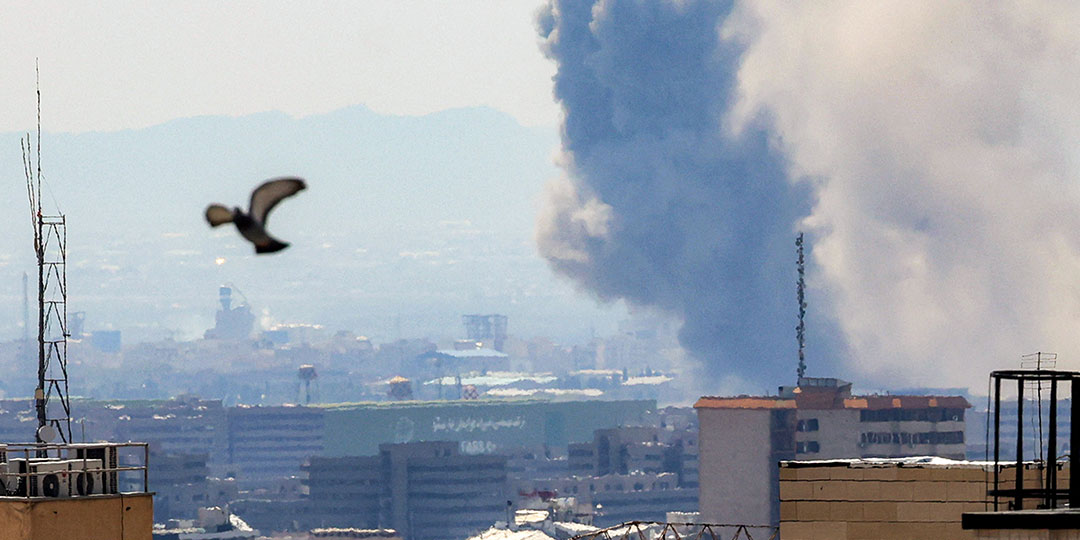
Multiple Iranian news agencies including the Mehr News Agency and newspapers Shargh and Ham-Mihan reported a series of explosions throughout Iran’s capital city Tuesday evening. An Agence France-Presse journalist confirmed hearing multiple blasts originating from northern Tehran.
The explosions represented either direct Israeli strikes on Tehran itself or Iranian air defense systems engaging incoming missiles, though the precise nature of the blasts could not be immediately determined due to reporting restrictions.
Extent of Damage and Initial Assessment
Details regarding the full scope of damage from the explosions remained unclear in initial reporting. The powerful nature of the blasts heard by AFP journalists and confirmed by local residents suggested strikes on significant targets within the capital city.
Reporting restrictions prevented Agence France-Presse from accessing strike sites to independently verify damage assessments and casualty figures, relying instead on official Iranian statements and international monitoring organizations.
Casualties Reported in Alborz Province Near Capital
Iranian media reported that at least 18 people, including two children, were killed in strikes on Alborz province neighboring the Iranian capital Tuesday. A deputy governor of Alborz province stated, according to the judiciary’s Mizan Online website and the Fars News Agency:
“The deaths of 18 of our fellow citizens have been confirmed, including two young children” in U.S.-Israeli strikes on residential areas.
Wounded and Ongoing Assessment
The deputy governor added that “24 people were wounded in the early morning attack.” The casualty figures represented preliminary assessments, with potential for revision as rescue operations continued and full damage assessments were completed.
The Iranian government had not released an updated comprehensive casualty toll for the overall war in recent days, reflecting difficulties in obtaining accurate information across multiple conflict zones.
Overall War Casualty Statistics
According to the U.S.-based Human Rights Activists News Agency (HRANA), at least 3,597 people have been killed since the war began in late February, including:
- 1,665 civilians – among them at least 248 children
- 1,221 military personnel
- 711 people whose status had not been classified
Verification Challenges and Information Gaps
Agence France-Presse stated it was unable to access strike sites within Iran to independently verify casualty tolls and damage assessments due to reporting restrictions imposed by Iranian authorities. This limitation means available figures depend on Iranian government data and international monitoring organizations, which may not capture the complete picture of destruction and casualties.
The inability to conduct independent verification raises questions about the accuracy and completeness of casualty figures reported by Iranian officials and international human rights organizations.
Broader Context of the Ongoing Conflict
The current war erupted in late February following U.S.-Israeli military strikes on Iran that resulted in the assassination of Iranian Supreme Leader Ayatollah Khamenei. The conflict has now entered its second month with repeated waves of reciprocal attacks and counterattacks escalating in intensity and scope.
Collapse of Ceasefire Negotiations and Mediation Efforts
Pakistan and other regional states had attempted to mediate between the conflicting parties and present ceasefire proposals, but Trump’s rejection of the most recent proposal signals the continuation of military operations. The American stance reflects an administration strategy that currently favors military pressure over direct negotiations at this critical juncture.
Escalation Cycle and Mutual Retaliation Pattern
The rapid exchange of airstrikes and missile responses illustrates entry into a dangerous escalatory spiral where each attack triggers a response, incrementally increasing the likelihood of expanded conflict and potential involvement of additional regional actors.
Risk Factors for Further Expansion
The escalating pattern raises serious concerns regarding:
- Regional instability – with potential for conflict expansion to include additional regional states
- Global energy markets – continued disruption of Strait of Hormuz transit and oil/gas supply constraints
- International economy – escalating supply chain disruptions and energy costs
- Financial stability – persistent increases in energy and commodity prices affecting global markets
International Mediation Efforts Stalled
Trump’s rejection of the most recent ceasefire proposal demonstrates the U.S. administration still believes military pressure may achieve superior objectives compared to negotiations. However, this approach risks prolonged escalation and recurring cycles of attacks and counterattacks continuing for weeks or months without clear resolution.
The rejection signals that diplomatic off-ramps may be closing as military logic increasingly dominates decision-making on both sides.
Humanitarian and Economic Toll Mounting
As conflict continues, accumulated human and economic costs escalate:
- Casualties mounting – including increasing numbers of civilian deaths and injured
- Displacement – millions of people potentially forced to relocate from conflict zones
- Economic destruction – infrastructure damage and industrial losses accumulating rapidly
- Humanitarian crises – shortages of food, water, electricity, and medicine affecting populations
Civilian Infrastructure Under Threat
The targeting of residential areas in Alborz province, as reported by Iranian officials, indicates that civilian infrastructure and population centers face direct military threat. Previous waves of strikes have targeted both military and civilian objectives, raising humanitarian concerns regarding disproportionate civilian impact.
Military Posture and Strategic Calculations
Israel’s announcement of completed airstrike waves and Iran’s rapid missile response suggest both militaries remain mobilized for continued operations. Neither side has signaled willingness to accept current military balance or diplomatic proposals.
The pattern of military messaging through official channels indicates both governments using military operations as political statements regarding resolve and capability.
Trump Administration’s Military Strategy
Trump’s characterization of the ceasefire proposal as “not yet enough” preceded Israeli military action, suggesting alignment between Washington and Tel Aviv regarding military objectives. The timing implies the U.S. administration retains leverage over Israeli military operations and coordinates strategic moves.
However, this approach risks committing both nations to escalating commitments with decreasing diplomatic off-ramps.
Conclusion:
Israel announced a wave of airstrikes on Iranian infrastructure Tuesday, followed immediately by Iranian missile retaliation and reports of explosions throughout Tehran. At least 18 people, including two children, were killed in strikes on Alborz province, marking the latest escalation in an ongoing cycle of mutual retaliation. President Trump’s rejection of international ceasefire proposals signals that military pressure will continue without near-term diplomatic resolution. With each side’s military capabilities on full display and diplomatic channels apparently closed, the conflict appears poised to continue through repeated waves of escalating attacks and counterattacks. The mounting humanitarian toll—with over 3,500 reported deaths so far—underscores the urgent need for diplomatic intervention. However, absent dramatic shifts in U.S. policy or Iranian strategic calculations, the cycle of military escalation appears likely to persist for weeks or months with no clear endpoint visible on the horizon.