
The United Nations called Friday for swift and transparent investigations into deadly Israeli airstrikes targeting Lebanon and Iran, demanding accountability under international humanitarian law. The calls came on the sixth day of the Israeli-American war against Iran and its regional allies, as violence intensifies and military operations expand in scope.
The global body warned of potential grave violations of international humanitarian law, including forced displacement of hundreds of thousands of civilians, and urged all parties to immediately cease escalation and give peace a genuine opportunity to take root.
Relentless Israeli Airstrikes Target Civilians and Residential Areas
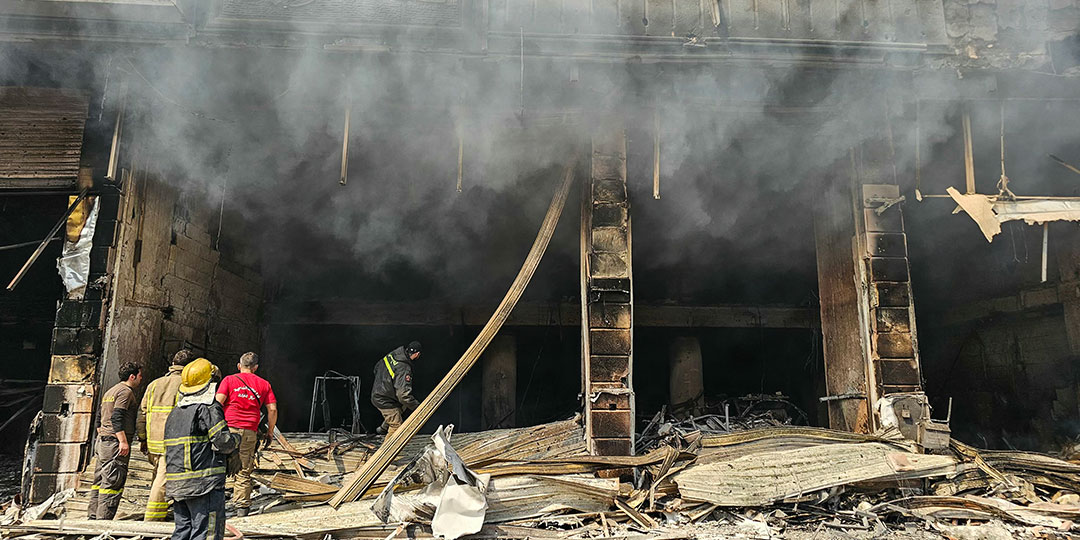
Israel renewed intensive aerial bombardment Friday on residential areas throughout Lebanon including southern Beirut suburbs, the Bekaa Valley, and southern regions. Lebanese Prime Minister Nawaf Salam warned of an imminent “humanitarian catastrophe” resulting from mass population displacement and forced evacuation.
Ravina Shamdasani, spokesperson for the UN Office of the High Commissioner for Human Rights, stated: “The devastating impact of this renewed conflict is evident before our eyes, as civilians pay an exorbitant price.” She warned of dangerous escalation and called on warring parties to “step back from the brink of dangerous escalation of this conflict in Lebanon.”
Direct Attacks on Residential Buildings Kill Children and Women
The UN documented multiple strikes on residential areas resulting in heavy civilian losses. At least eight people were killed in an airstrike on a residential building in Baalbek Wednesday, including three girls and two women. An aerial strike on the Nabatieh area Thursday killed an entire family of four people.
Shamdasani stated that “immediate and comprehensive investigations must be conducted, particularly to determine whether these attacks respected the principles of distinction, proportionality, and precautions.” These potential violations reflect a clear failure to uphold international humanitarian law obligations.
Israeli Evacuation Orders Displace Hundreds of Thousands of Civilians
The UN warned that “Israeli military ground incursions in southern Lebanon, comprehensive evacuation orders for residents of southern Beirut, the Bekaa Valley, and areas south of the Litani River, along with continued airstrikes across the country, compound suffering among already exhausted civilian populations.”
Israeli authorities issued sweeping evacuation orders covering more than one hundred Lebanese towns and villages according to UN reports. These orders, particularly in southern Beirut and the Bekaa region, have sparked widespread “fear and panic among residents,” the UN documented.
Forced Mass Evacuations May Constitute War Crime
Shamdasani warned that “hundreds of thousands have now been affected by these Israeli evacuation orders,” emphasizing that such measures “may amount to prohibited forced displacement” under international law. Forced mass displacements constitute direct violations of Article 49 of the Fourth Geneva Convention of 1949, which protects civilians during armed conflict. Forced displacement constitutes a war crime under international criminal law.
These mass forced evacuations represent systematic violations of fundamental humanitarian principles protecting civilian populations in armed conflict. The scale of displacement and methods employed raise grave concerns about potential crimes against humanity.
UN Human Rights Chief Demands Transparent Investigation Into Iran School Strike
UN High Commissioner for Human Rights Volker Türk called Friday on the United States to “accelerate” a “transparent and impartial investigation” into an airstrike that struck a girls primary school in Iran’s Minab city.
Iran holds the United States and Israel responsible for the strike that occurred Saturday, the first day of war, claiming over 150 deaths, mostly children and schoolgirls. Neither Washington nor Tel Aviv has claimed direct responsibility, though US Secretary of State Marco Rubio stated Monday that the Pentagon is “investigating the matter.”
Clear Targeting of Civilian Institution Protected Under International Law
Türk condemned what he called “this tragic incident,” emphasizing that the school “is clearly a civilian institution that should never be attacked” under international humanitarian law. He identified several deeply troubling aspects of the strike:
Suspicious Timing: The strike occurred during early morning hours when dozens of children would likely be present in the school.
Type of Weapons: The nature of munitions and explosives used resulted in mass casualties.
Absence of Military Justification: No clear military target existed to justify attacking an educational facility.
Türk stated gravely: “There is a terrible, tragic lesson to be learned when girls are killed in this manner.”
Immediate Accountability and Comprehensive Protocol Review Required
Türk demanded far more than “assurances against repetition,” calling instead for “comprehensive review of all standard operating procedures when addressing such matters.” He emphasized the necessity for:
Immediate Accountability: Those responsible for the strike must face justice and international prosecution.
Justice for Victims: Victims and their families deserve full reparations and transitional justice mechanisms.
Procedural Reform: Military protocols must be revised to prevent targeting of civilian educational institutions.
Türk noted that the UN human rights office faced serious obstacles accessing accurate information “given the absence of UN presence in Iran, and with continuing internet blackouts making information gathering difficult.” He concluded firmly: “Those who carried out this strike must now lead such an investigation,” adding “we expect accountability.”
Hezbollah Launches Rocket Barrages as War Escalates on Both Fronts
As Israeli airstrikes intensify across Lebanon, Hezbollah continues launching rocket barrages toward Israel targeting residential areas in northern and central regions. The attacks have wounded at least three people on the Israeli side.
The UN emphasized that “Hezbollah continues launching barrages of rockets at Israel, targeting residential areas,” noting this raises “new concerns about indiscriminate attacks on civilians.”
The reciprocal escalation represents dangerous movement toward full-scale regional war engulfing both sides of the Lebanese-Israeli border, with shrinking prospects for political and diplomatic solutions.
Principles of International Humanitarian Law Under Attack in Conflict
The UN demanded immediate and comprehensive investigations specifically “to determine whether these attacks respected the principles of distinction, proportionality, and precautions.” These three principles form the absolute foundation of international humanitarian law:
Principle of Distinction: Combatants must clearly differentiate between legitimate military targets and protected civilian institutions. Striking schools, hospitals, residential homes, and farms violates this principle directly and fundamentally. This principle requires constant assessment during military operations.
Principle of Proportionality: Military force employed must never exceed military necessity. Bombing entire residential neighborhoods and entire districts to eliminate a limited military target breaches this essential balance. Each military action must be weighed against anticipated civilian harm.
Principle of Precautions: Parties must take every feasible and practical measure to avoid civilian harm and protect civilian property. Failing to evacuate residents beforehand or issue adequate warnings constitutes severe neglect of required precautions. This principle demands advance planning to minimize civilian impact.
UN Chief Issues Urgent Pleas for De-escalation and Immediate Peace
On the sixth day of war, the UN High Commissioner issued an impassioned appeal demanding all parties immediately cease hostilities. Volker Türk told reporters:
“The world must take urgent steps to contain and extinguish this fire, but we see only more inflammatory and hostile rhetoric, more bombing, more destruction, more killing, more escalation.”
He added: “I urge concerned states to act immediately to reduce escalation and give peace a chance. I urge all other states to clearly demand that warring parties step back.”
Warnings of Regional Chaos and Devastating Economic Consequences
Türk warned that this war “has drawn global powers into the conflict and disrupted global energy and transportation sectors, spreading chaos even to areas that were enjoying peace in this already troubled region.”
He expressed particular concern about developments in Lebanon, viewing it as “transforming into a major flashpoint.” He stated: “I am deeply concerned about recent developments following Hezbollah attacks on Israel, Israel’s violent response, and widespread evacuation orders forcing hundreds of thousands of people from their homes.”
Emergency Call for Immediate Ceasefire and Halt to Military Operations
Türk issued an urgent appeal: “I call for an immediate cessation of hostilities.” He emphasized the necessity for “restraint to prevent further terror and destruction affecting civilians.”
He called on major powers and regional actors to intervene immediately and effectively to stop the war, emphasizing that time is running out and civilian losses mount daily.
UN Warns Against Contempt for International Law and Shared Humanity
The UN High Commissioner expressed regret at “sowing confusion about international law” and “some openly mocking the fundamental values of our shared humanity.” Türk viewed the ongoing war as representing dangerous and unacceptable regression from agreed international protection standards.
Global Appeal for Commitment to International Law and Human Rights
He called on “heads of state and governments worldwide to firmly commit to defending”:
International human rights law and protection of human dignity
International humanitarian law and the four Geneva Conventions
The UN Charter and its noble objectives for maintaining international peace
Türk declared forcefully: “We cannot afford more flashpoints of tension,” in clear reference to the dangerous reality that conflict continuation will open doors to boundless humanitarian violations and an unstoppable regional arms race.
Conclusion:
The United Nations stands in a complex and precarious position, demanding from one angle immediate investigations into grave violations of international law while the war develops at alarming speed on the ground. The international community has thus far failed to contain the broader Israeli-Iranian regional conflict, resulting in tragic expansion of destruction and mounting civilian losses in deeply troubling numbers. UN repeated appeals for peace, accountability, and adherence to international law remain largely symbolic gestures without effective enforcement mechanisms or decisive international pressure to halt violence and destruction. The gap between humanitarian standards and brutal military reality continues to widen as civilian suffering accumulates.