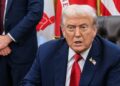
Trump warns Iran of potential consequences if no agreement is reached, as US and Iranian negotiators prepare for a new round of talks in Geneva aimed at addressing Tehran’s nuclear programme.
The discussions, scheduled for Tuesday and mediated by Oman, come amid renewed US military threats and heightened tensions in the region.
Speaking aboard Air Force One en route to Washington, President Donald Trump said he would be involved “indirectly” in the negotiations. “I don’t think they want the consequences of not making a deal,” he told reporters.
The talks mark the latest attempt to revive diplomacy after months of escalation, including a brief war between Iran and Israel in which the United States participated by bombing Iranian nuclear sites.
Geneva talks under Omani mediation
The Geneva talks are being facilitated by Oman, which has previously served as a mediator between Washington and Tehran. According to Iranian officials, discussions will focus primarily on the nuclear file and the possible lifting of US sanctions.
Iranian Foreign Minister Abbas Araghchi met his Omani counterpart Badr Albusaidi in Geneva on Monday to coordinate positions ahead of the negotiations. Iran’s foreign ministry said Araghchi emphasised Tehran’s seriousness in pursuing “result-oriented diplomacy” to secure what it described as the legitimate rights of the Iranian people.
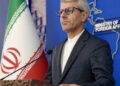
Foreign ministry spokesman Esmaeil Baqaei, quoted by the official IRNA news agency, said Tehran viewed Washington’s current stance as “more realistic” compared to previous positions.
Araghchi also confirmed he would meet Rafael Grossi, head of the International Atomic Energy Agency, for what he described as “deep technical discussion” on nuclear matters.
Western governments, including the United States and several European countries, suspect that Iran’s nuclear programme could be aimed at producing a nuclear weapon. Tehran denies this, insisting its programme is for peaceful civilian purposes.
Key issues on the table
The main areas of contention include:
Limits on Iran’s uranium stockpile and enrichment levels
• The scope and timing of US sanctions relief
• Verification mechanisms through the IAEA
• Whether other issues such as ballistic missiles and regional alliances should be included
Iran has stated that negotiations should remain limited to the nuclear issue. Washington, however, has previously sought to expand discussions to include Iran’s ballistic missile programme and its support for armed groups in the Middle East.
Iran’s deputy foreign minister Majid Takht-Ravanchi told the BBC that Tehran could consider compromises on uranium stockpiles if sanctions that have severely impacted the country’s economy are lifted.
“If we see sincerity on their part, we will be on a road to have an agreement,” he said.
Military pressure and regional escalation
The current diplomatic push follows a period of significant military escalation. A previous round of negotiations collapsed in June when Israel launched surprise strikes on Iran, triggering a 12-day war. The United States later joined the conflict by bombing Iranian nuclear facilities.
In recent days, Washington has increased its military presence in the region. A second US aircraft carrier was dispatched to the Middle East, while satellite images showed the USS Abraham Lincoln positioned approximately 700 kilometres off the Iranian coast.
Trump recently stated that a change of government in Iran would be the “best thing that could happen,” further intensifying tensions.
In response, Iran’s Islamic Revolutionary Guard Corps began large-scale military exercises in the Strait of Hormuz on Monday. State television said the drills were designed to prepare for “potential security and military threats.”
The Strait of Hormuz remains one of the world’s most strategic energy routes, with a significant share of global oil and liquefied natural gas shipments passing through it. Iranian officials have previously threatened to block the waterway during periods of confrontation.
Oil prices and market reaction
Trump’s warning to Iran also affected global markets. Oil prices rose initially before easing slightly:
West Texas Intermediate traded near $63 per barrel
• Brent crude hovered just below $69 per barrel
Market activity was relatively subdued due to public holidays in several Asian financial centres and the United States. However, analysts noted that any escalation around the Strait of Hormuz could significantly impact global energy supplies and prices.
Gold prices declined, while Asian equity markets showed mixed performance amid broader economic concerns and attention to global technology developments.
Conclusion:
The renewed Geneva talks represent a critical moment in US-Iran relations after months of military confrontation and diplomatic breakdown. While both sides signal conditional openness to an agreement, significant differences remain over sanctions, nuclear restrictions and broader regional issues.
The outcome of the negotiations could shape not only regional security but also global energy markets in the weeks ahead.