

The Iraqi government has reaffirmed that Iraq rejects use of its territory for military action or terrorist operations against any country in the region or beyond, stressing that its land, airspace, and territorial waters must not be used as a launchpad for attacks.
The position was reiterated during official remarks by senior Iraqi officials amid escalating regional tensions. Baghdad emphasized that safeguarding national sovereignty remains a core principle of its foreign and security policy.
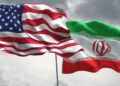
The statements came as regional developments, particularly those involving Iran and the United States, continue to raise concerns about broader instability.
Official Position Reaffirms Iraq’s Sovereignty
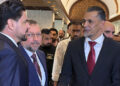
According to a statement by the Iraqi Foreign Ministry, Deputy Foreign Minister for Bilateral Relations Ambassador Mohammed Hussein Bahr Al-Uloom attended the 47th anniversary celebration of Iran’s Islamic Revolution, held by the Iranian embassy in Baghdad on February 13, 2026.
During the event, Bahr Al-Uloom conveyed the Iraqi government’s congratulations to the government and people of the Islamic Republic of Iran. He highlighted the historical ties between the two countries, rooted in geographic proximity and longstanding religious, cultural, and social connections.
He stressed that Iraq rejects any violation of its sovereignty or the use of its territory, territorial waters, or airspace to launch military or terrorist acts against any country, including Iran.
The deputy minister also underscored Iraq’s rejection of military attacks carried out by the Israeli entity, warning that continued military escalation poses a serious threat to regional peace and security.
Iraq Rejects Use of Its Territory for Military Action Amid Regional Escalation
In a separate statement, Sabah Al-Numan, spokesperson for the Commander-in-Chief of the Iraqi Armed Forces, reiterated that “the Republic of Iraq affirms its firm and principled position rejecting the use of its territory, airspace, or territorial waters as a starting point for any military actions targeting any country whatsoever.”
He noted that the statement comes amid rapid regional developments and escalating tensions that threaten the stability and security of the region. The remarks follow heightened tensions related to Iran and reported US threats of intervention linked to internal developments there.
Iraqi officials emphasized the following principles:
Respect for Iraq’s sovereignty and territorial integrity.
Preventing Iraq from becoming an arena for regional conflict.
Prioritizing diplomatic channels and dialogue to resolve disputes.
Call for Dialogue and De-Escalation
Iraqi authorities called on all concerned parties to exercise restraint and adopt dialogue over confrontation. Officials stated that diplomatic negotiations remain the most effective path to addressing ongoing challenges and preventing further instability.
The Foreign Ministry and the armed forces both stressed the importance of avoiding actions that could widen the scope of military confrontation in the region.
Baghdad’s stance reflects its declared policy of avoiding alignment with regional axes and maintaining balanced relations with neighboring and international actors. Iraqi leaders have repeatedly stated that the country’s security and internal stability must not be compromised by external conflicts.
Iraq-Iran Relations in a Sensitive Regional Context
At the conclusion of the event, Bahr Al-Uloom thanked Iranian Ambassador to Baghdad Mohammad Kazem Al-Sadeq and embassy staff for their efforts in strengthening bilateral ties.
Iraq and Iran maintain cooperation across multiple sectors, including trade, energy, and border coordination. However, Iraqi officials continue to emphasize that such relations do not alter Baghdad’s position on protecting its sovereignty and preventing any use of its territory in external military confrontations.
Conclusion:
The renewed declaration that Iraq rejects use of its territory for military action underscores Baghdad’s commitment to sovereignty and regional stability. As tensions persist across the Middle East, Iraqi officials continue to call for de-escalation and diplomatic solutions to prevent further conflict.