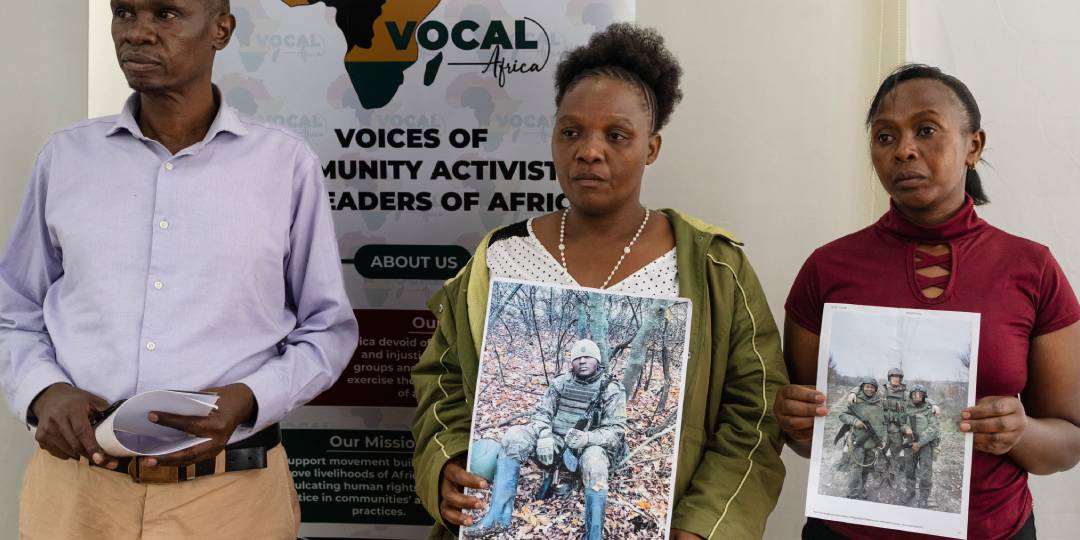

Kenya forced conscripts in Ukraine has become a growing diplomatic issue after Nairobi confirmed that its foreign minister will travel to Moscow next month to address the recruitment of Kenyan citizens into the Russian army.
Kenyan officials say young men were lured to Russia with promises of high-paying civilian jobs, only to be compelled to sign military contracts and sent to the front lines in Ukraine. Several have been killed, while others returned with serious injuries.
The developments follow an AFP investigation that detailed how four Kenyan men with no prior military background were deployed to combat zones after signing contracts written in Russian.
Kenya to raise issue directly with Moscow
Foreign Minister Musalia Mudavadi said he plans to visit Russia to seek what he described as a decisive resolution to the matter.
“We have seen loss of lives, and I am planning to make a visit to Moscow so that we can emphasise that this is something that needs to be arrested,” Mudavadi said in a statement.
He added that Kenya will pursue:
The release of Kenyan citizens held as prisoners of war in Ukraine
Verification of the condition of those hospitalised
Measures to prevent further recruitment through deceptive practices
Mudavadi confirmed that more than 30 Kenyans have been evacuated from Russia over the past two months. Kenyan authorities have also shut down what they described as unscrupulous recruitment agencies operating in the country.
Junior Foreign Minister Korir Sing’Oei described the situation as “unacceptable,” stating that Kenyans were being used as “cannon fodder” on the battlefield.
“No Kenyan would voluntarily enter into that kind of engagement,” he told AFP.
In December, Kenyan authorities estimated that around 200 citizens had been sent to fight in Ukraine, though returnees interviewed by AFP said the actual number may be higher.
Deception, contracts and front-line deployment
According to the AFP investigation, four men, whose names were changed for security reasons, were recruited by a Nairobi-based agency that promised employment in Russia.
They were told they would work as:
A salesman
Security guards
A professional athlete
Upon arrival, they were taken to military facilities and presented with contracts in Russian. The men said they were pressured to sign and were later deployed to active combat zones in Ukraine.
Three of the four returned to Kenya wounded. One described being injured by drone fire, while others reported heavy casualties among their units.
Family members of those killed have also spoken publicly. Grace Gathoni said her husband, who had intended to work as a driver in Russia, was killed in combat. Another Kenyan father confirmed that his son was killed and buried in Russia.
Wider African recruitment into the Ukraine war
Kenyan officials are not alone in raising concerns. On Tuesday, South African President Cyril Ramaphosa held talks with Russian President Vladimir Putin regarding South Africans recruited into Russian forces.
The South African government said it had received distress calls from 17 men who were reportedly trapped in the Donbas region after being misled into joining mercenary formations.
Ukraine’s foreign minister said in November that more than 1,400 citizens from 36 African countries had been identified among Russian ranks.
Western intelligence estimates cited by AFP indicate that Russia has suffered over 1.2 million casualties since the start of its invasion of Ukraine, prompting Moscow to seek additional recruits, including from Africa.
Kenyan authorities say they are working to dismantle recruitment networks locally. One agency employee has been charged with human trafficking following a police raid that rescued 21 men preparing to travel to Russia. The accused denies the charges.
Conclusion:
Kenya’s planned diplomatic engagement with Moscow underscores rising concern in Nairobi over citizens recruited into the Ukraine war. Authorities say their priority is securing the return of affected nationals, preventing further recruitment, and ensuring accountability for deceptive practices.