
Venezuela’s parliament has granted initial approval to a Venezuela amnesty bill that covers political charges widely used against dissidents during the eras of Hugo Chavez and Nicolas Maduro. The legislation is presented as part of an effort to advance national reconciliation following Maduro’s removal from power.
The bill, however, explicitly excludes serious human rights violations committed during nearly 27 years of socialist rule. Crimes such as crimes against humanity and war crimes remain outside the scope of the proposed amnesty, according to the draft text obtained by AFP.
Scope of the Amnesty Law
The proposed “Amnesty Law for Democratic Coexistence” targets offenses commonly brought against government critics. These include charges such as treason, terrorism, and spreading hate, which rights groups say were frequently used to silence dissent under both Chavez and Maduro.
According to the draft law, the amnesty applies to acts linked to:
• The failed 2002 coup attempt against Chavez
• Repeated protest movements between 2004 and 2024
• Political criticism expressed through social media or messaging platforms
The bill also removes political bans on several opposition figures, including Nobel Peace Prize laureate Maria Corina Machado, allowing them to seek public office again.
Crimes Excluded From Amnesty
Constitutional Limits
The draft legislation states that it does not apply to:
• Serious violations of human rights
• Crimes against humanity
• War crimes
• Intentional homicide
• Corruption
• Drug trafficking
These offenses cannot be pardoned under Venezuela’s constitution. The International Criminal Court is currently investigating alleged crimes against humanity committed during Maduro’s presidency, a factor that weighs heavily on the debate surrounding accountability.
Concerns Over Ambiguity
Legal experts and rights advocates have warned that the bill’s wording may allow broad discretion. While it excludes grave crimes, it includes unspecified offenses committed by judges, prosecutors, and other officials, raising concerns about selective application in a judiciary long seen as aligned with the former ruling movement.
Political Context After Maduro
The bill was introduced by interim president Delcy Rodriguez, who assumed office after Maduro was captured by US forces in Caracas last month and transferred to New York to face drug-related charges. Rodriguez has emphasized stability and reconciliation during the transition period.
During the parliamentary session, she described the bill’s first reading as a crucial step toward peace and national unity. Emotional scenes unfolded in the National Assembly as lawmakers from both the opposition and the Chavista bloc called for reconciliation.
Parliament speaker Jorge Rodriguez, brother of the interim president and a former close ally of Maduro, issued a public apology for state crimes committed since Chavez took power in 1999.
Reactions From Across Society
Opposition lawmaker Tomas Guanipa said the bill could mark a historic turning point, allowing Venezuelans to speak freely without fear of imprisonment. Maduro’s son, legislator Nicolas Maduro Guerra, also urged unity, stating that the country could not withstand further cycles of revenge.
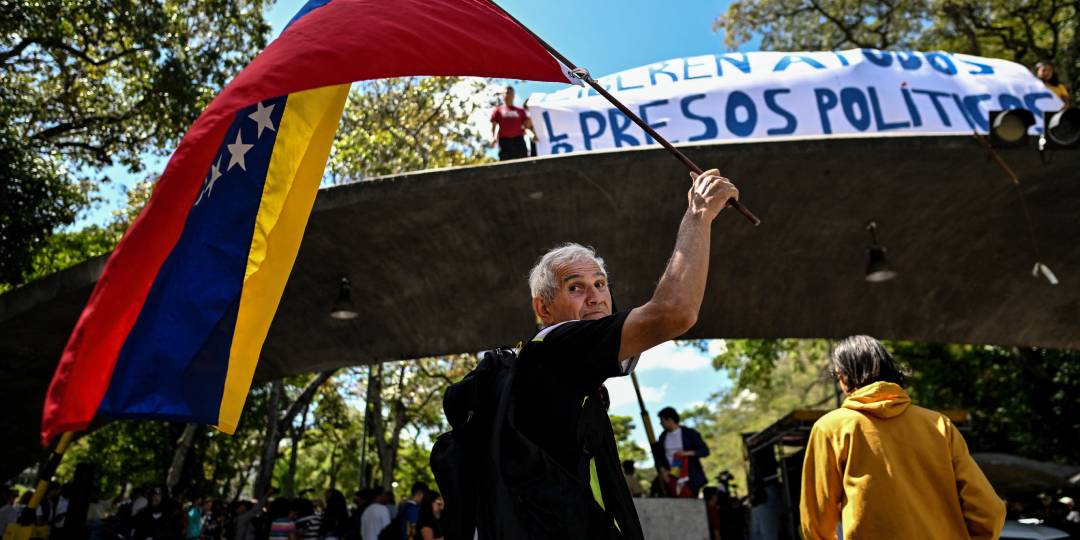
The announcement of a general amnesty last week sparked celebrations across the country, as families hoped for the release of hundreds of political prisoners still detained after Maduro’s removal.
Alfredo Romero, head of the rights group Foro Penal, welcomed the bill in principle, saying amnesty can help prevent the past from derailing political transition. At the same time, he cautioned against turning reconciliation into a campaign of persecution.
Next Steps
Lawmakers are scheduled to debate the bill again next Tuesday for a final reading. Its passage would formalize one of the first major legal measures of the post-Maduro period, even as debates continue over justice, accountability, and the future direction of Venezuela’s political system.
Conclusion:
The Venezuela amnesty bill represents an early attempt to balance reconciliation with constitutional limits on impunity. While it offers relief to political prisoners and opposition figures, it leaves unresolved questions about accountability for decades of alleged abuses under Chavez and Maduro.