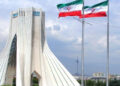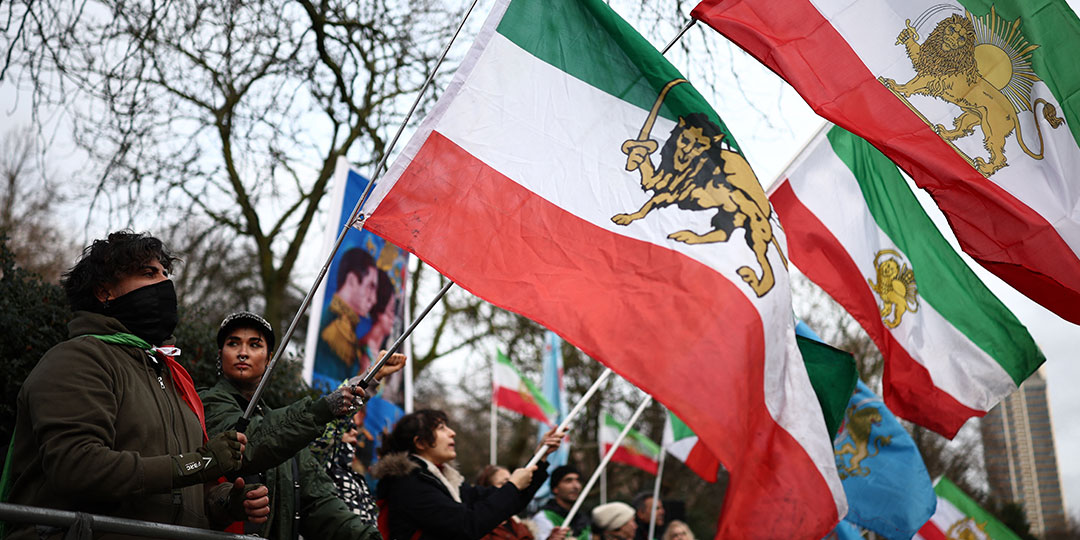

Ongoing protests across Iran represent a significant challenge to the country’s leadership, though analysts remain cautious about predicting the immediate collapse of the Islamic republic.
The demonstrations, which began over economic grievances, have escalated to include demands for fundamental changes to the clerical system established after the 1979 revolution. In response, authorities have initiated a crackdown that rights groups report has resulted in hundreds of deaths. Despite the unrest, the rule of supreme leader Ayatollah Ali Khamenei, 86, remains in place.
“These protests arguably represent the most serious challenge to the Islamic republic in years, both in scale and in their increasingly explicit political demands,” Nicole Grajewski, a professor at the Sciences Po Centre for International Studies in Paris, told AFP. She noted, however, that it is unclear if the protests will succeed in unseating the leadership, citing “the sheer depth and resilience of Iran’s repressive apparatus.”
Thomas Juneau, a professor at the University of Ottawa, stated, “At this point, I still don’t assess that the fall of the regime is imminent. That said, I am less confident in this assessment than in the past.”
Analysts point to several key factors that will determine the outcome.
Sustained Protests
A critical factor is the size and persistence of the demonstrations. “They are growing, but have not reached the critical mass that would represent a point of no return,” said Juneau. The current movement follows major protests in 2022-2023 after the death of Mahsa Amini and mass rallies in 2009. However, a multi-day internet shutdown has made it difficult to assess the current scale.
Arash Azizi, a lecturer at Yale University, noted that “the protesters still suffer from not having durable organised networks that can withstand oppression,” suggesting that strategic strikes would require a level of leadership that has not yet emerged.
Cohesion in the Elite
Analysts agree that change is unlikely without divisions within the security forces and political leadership. So far, key institutions, including the parliament and the Islamic Revolutionary Guard Corps (IRGC), have publicly supported Khamenei.
“Historically, those are critical indicators of whether a protest movement can translate into regime collapse,” said Grajewski, pointing out that there are currently “no clear signs of military defections or high-level elite splits.” Jason Brodsky of United Against Nuclear Iran added that while the protests are “historic,” defections and cracks in the elite are necessary ingredients for the regime to fall.
Foreign Military Intervention
The possibility of foreign military action, particularly from the United States, could fundamentally change the situation. The White House has indicated a focus on a diplomatic response but has not ruled out strikes. “A direct US military intervention would fundamentally alter the trajectory of the crisis,” Grajewski commented. Juneau added that the regime is “more vulnerable than it has been, domestically and geopolopolitically, since the worst years of the Iran-Iraq war.”
Organised Opposition
While Reza Pahlavi, the US-based son of the ousted shah, has been a prominent voice supporting the protests, the broader opposition in the diaspora remains fragmented. “There needs to be a leadership coalition that truly represents a broad swathe of Iranians and not just one political faction,” said Azizi.
Khamenei’s Health
Having served as supreme leader since 1989, Khamenei’s advanced age and health are a constant source of speculation. Uncertainty over his succession raises questions about the country’s future leadership, with possibilities ranging from his son, Mojtaba, to a governing committee. Juneau suggested one scenario could be “a more or less formal takeover by the Revolutionary Guards.”