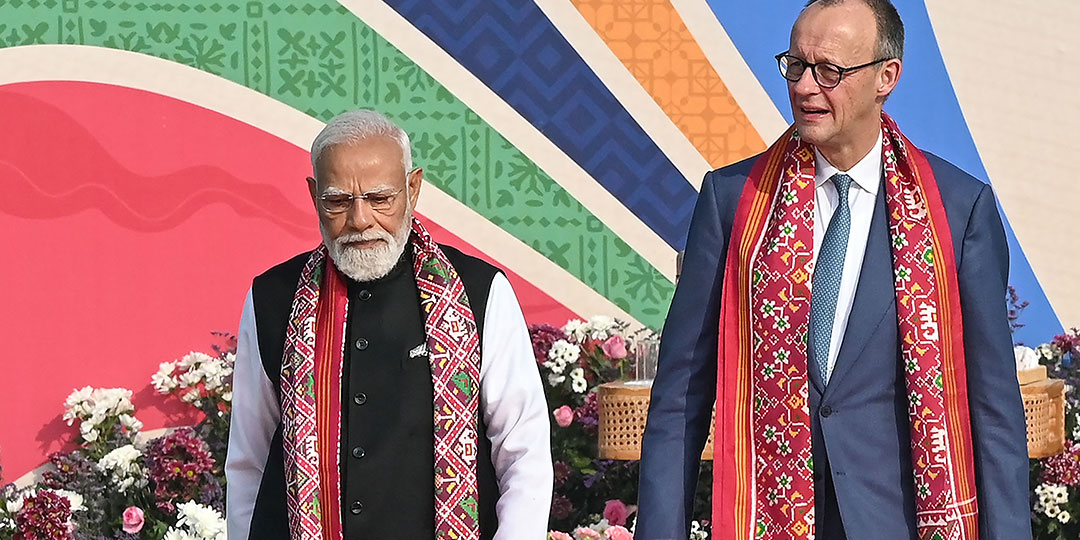

Indian Prime Minister Narendra Modi announced on Monday that India and Germany are set to enhance cooperation within their defence industries. The announcement came after a meeting with German Chancellor Friedrich Merz in Gujarat.
Chancellor Merz affirmed Berlin’s desire for a closer security partnership with New Delhi, emphasizing “cooperation between our defence industries” as a key area. This move is aimed at reducing India’s long-standing dependence on Russian military equipment.
The meeting precedes an upcoming EU-India summit and occurs as both parties continue to negotiate a free trade agreement. Following the leaders’ discussion, several agreements were announced to expand the existing $50 billion trade relationship, including joint declarations on semiconductors, critical minerals, and defence industry collaboration.
“We are working together on secure, trusted, and resilient supply chains, and our MoUs on these issues will strengthen our partnership,” Modi stated.
Both nations are currently navigating economic and security challenges posed by global powers. Merz highlighted the changing international landscape, stating, “The world is currently undergoing a process of realignment… It is increasingly characterised by great power politics and thinking in terms of spheres of influence, which is why we must join forces.”
Merz also confirmed plans for joint military exercises between the two countries’ air forces and navies to promote security in the Indo-Pacific region.
“It is of particular strategic importance that we deepen cooperation between our defence industries. This strengthens both sides and also helps to make India less dependent on Russia,” Merz added.
India has been actively diversifying its military procurement in recent years, turning to suppliers like France, Israel, and the United States, alongside Russia. A significant potential deal under negotiation involves Germany’s Thyssenkrupp Marine Systems co-producing six submarines for the Indian Navy with India’s Mazagon Dock Shipbuilders, which would include technology transfer provisions.
The leaders also agreed on pursuing “deeper cooperation in defence, space and other critical and emerging technologies.”
Chancellor Merz is scheduled to conclude his visit in the technology hub of Bengaluru on Tuesday.