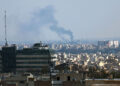
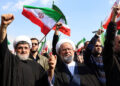
A US submarine sinks Iranian warship near Sri Lanka, marking one of the most dramatic escalations since the start of the US-Israeli offensive that killed Iran’s Supreme Leader Ayatollah Ali Khamenei. The incident has pushed the conflict far beyond the traditional Middle East fronts.
The confrontation has now extended into South Asia, the Gulf region, Iraq, Lebanon, and beyond as missile, drone, and naval attacks intensify and international actors warn of the growing risks of a prolonged regional war.
US submarine sinks Iranian vessel in Indian Ocean
A US Navy submarine fired a torpedo at an Iranian warship in the Indian Ocean during an operation the Pentagon referred to as “quiet death,” according to US Defense Secretary Pete Hegseth. This marks the first US sinking of an enemy naval vessel by torpedo since World War II.
Sri Lankan authorities reported recovering the bodies of 87 Iranian sailors. No immediate Iranian military statement was issued regarding the names of the victims or the ship’s mission.
Missile toward Turkey intercepted by NATO
The conflict reached NATO’s borders when a missile launched from Iran was intercepted before entering Turkish airspace. Ankara and NATO condemned the incident although a Turkish official told AFP the projectile was aimed at a base in Cyprus and had only veered off course.
Iran claims control over Strait of Hormuz as Gulf states are drawn in
Iran’s Revolutionary Guards said they had full control of the Strait of Hormuz, one of the world’s most vital maritime energy corridors. They warned foreign ships against entering the area. Several shipping lines have already suspended transit due to repeated reported attacks.
Gulf states have been increasingly caught in the crossfire.
List: Gulf incidents reported
• Saudi Arabia intercepted two cruise missiles and a drone near Ras Tanura refinery.
• Drones struck near the US consulate in Dubai and a missile hit the US base at Al-Udeid in Qatar.
• The UAE said it intercepted most of a large-scale missile and drone barrage.
• Kuwait reported the death of an 11-year-old girl from falling shrapnel.
Thirteen people, including seven civilians, have been killed across Gulf countries since the war began. The Pentagon also confirmed six US service members killed since Saturday.
Evacuations and disrupted air travel
The United States urged its citizens to leave the region if possible despite commercial travel disruptions. European governments, including Britain and France, have sent chartered flights to evacuate their nationals.
Israel expands attacks in Lebanon as Hezbollah responds
Israeli air strikes intensified across Lebanon, hitting areas near the presidential palace in Beirut and Hezbollah’s strongholds in the southern suburbs. Lebanese authorities reported 11 killed.
Israel also warned all residents south of the Litani River to evacuate, a move affecting a vast region. Locals described the bombardment as unprecedented.
Civilian fears rise in Beirut
A hotel strike in Hazmieh, a predominantly Christian area, alarmed residents. One resident told AFP that the hit site was “a stone’s throw” from her home, underscoring how violence is spreading across previously quiet districts.
Regional political fallout and warnings from global actors
Global leaders reacted sharply to the escalating conflict.
Vatican warns of “erosion of international law”
Vatican Secretary of State Pietro Parolin cautioned against “preventive war” and said global norms risk collapse if states justify such actions. He called for diplomacy through multilateral institutions.
US dismisses role of Russia and China
US Defense Secretary Hegseth said Russia and China were “not a factor” in Washington’s strategic calculations, despite their historic ties to Iran and criticism of the US-Israeli campaign.
Iraq’s Sistani condemns the “unjust war” on Iran
Grand Ayatollah Ali Sistani, Iraq’s top Shiite cleric, strongly condemned the war on Iran. He urged Muslim-majority countries and the international community to push for an immediate ceasefire and a fair resolution to Iran’s nuclear dispute.
Sistani’s position carries significant weight across Iraq and the wider region due to his long-standing religious authority and independence from Iran’s political system.
Tehran postpones Khamenei funeral
Iran postponed the state funeral for Khamenei as officials work to appoint a new supreme leader. Israel previously declared that it would target any successor, deepening concerns about the conflict’s trajectory.
US Congress debates Trump’s war powers
In Washington, the US Senate prepared to vote on a resolution limiting President Donald Trump’s authority to continue military operations against Iran without congressional approval. With a Republican majority in the Senate, the resolution is expected to fail.
Democrats accused the administration of launching the war without evidence of an imminent threat. Some Republicans warned their support could weaken if the conflict escalates or becomes prolonged.
War may last weeks
US officials privately told lawmakers the campaign could last several weeks and may require emergency military funding. The War Powers Act may force additional congressional votes later.
Conclusion:
The escalation across land, air, and sea has widened the Iran-US-Israel conflict into a multi-front regional war with global implications. With rising civilian casualties, expanding military engagements, and growing diplomatic alarm, the crisis shows no immediate signs of easing.