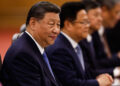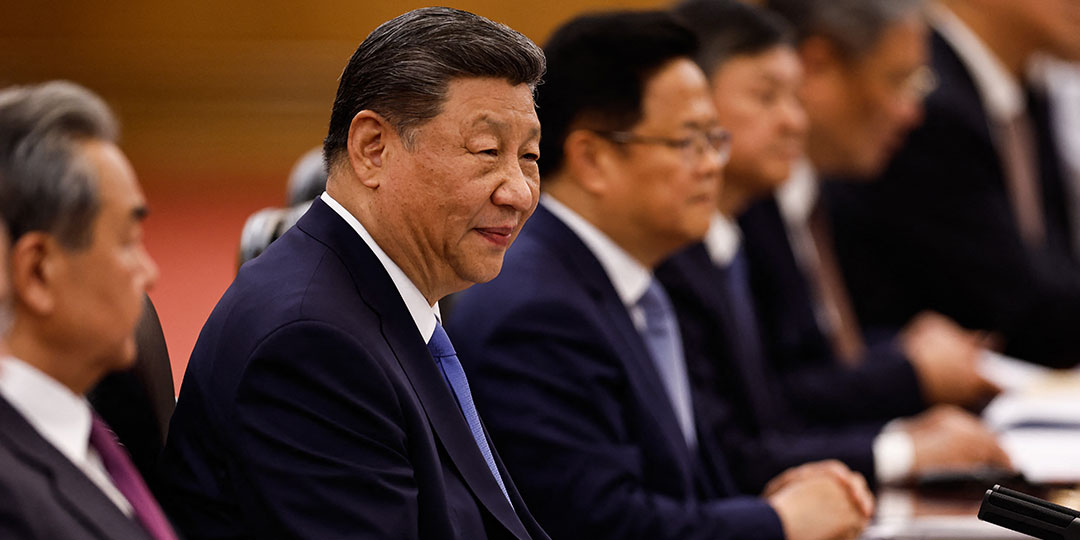

China zero-tariff policy for Africa will take effect on May 1, Chinese President Xi Jinping announced, expanding Beijing’s duty-free access to nearly all African countries. The move was reported by Chinese state media on Saturday as African leaders gathered in Addis Ababa for the annual African Union summit.
Under the new arrangement, zero tariffs will apply to imports from 53 African countries that maintain diplomatic relations with Beijing. Only Eswatini is excluded, as it recognizes Taiwan, which China claims as part of its territory and has not ruled out taking by force.
China is already Africa’s largest trading partner and has financed major infrastructure projects across the continent under its Belt and Road Initiative.
Scope of the China zero-tariff policy for Africa
China previously granted zero-tariff treatment to 33 African countries. Last year, Beijing announced plans to extend the policy to all African diplomatic partners.
From May 1, the zero-levy system will:
Cover 53 African countries with diplomatic ties to Beijing
Exclude Eswatini due to its relations with Taiwan
Apply to a wide range of African exports entering the Chinese market
Speaking at the African Union summit, Xi said the agreement “will undoubtedly provide new opportunities for African development,” according to state media.
The expansion comes at a time when several African economies are seeking to diversify trade partnerships. This follows the imposition of steep tariffs by US President Donald Trump on multiple countries last year, which reshaped global trade flows.
For African exporters, expanded access to the Chinese market may offer alternatives as global protectionist measures increase.
China defends trade stance in Europe
While strengthening ties with Africa, Beijing is also facing growing scrutiny from European partners.
At the Munich Security Conference on Friday, Chinese Foreign Minister Wang Yi told his French and German counterparts that Europe’s economic and security challenges do not stem from China.
“China’s development is an opportunity for Europe, and Europe’s challenges do not come from China,” Wang said, according to a Chinese foreign ministry statement.
He urged the European Union to adopt what he described as a rational and pragmatic approach toward Beijing. Wang added that China and Europe are partners rather than adversaries, emphasizing economic interdependence.
The remarks come amid:
Ongoing EU concerns over China’s trade surplus
Disputes regarding Chinese electric vehicle exports
European accusations that Chinese state subsidies distort competition
EU concerns over Beijing’s ties with Russia during the Ukraine war
The EU is also seeking to reduce reliance on China for strategic materials such as rare earths and to address its significant trade deficit with the world’s second-largest economy.
WTO warns on China’s $1.2 trillion trade surplus
At the same Munich conference, World Trade Organization Director-General Ngozi Okonjo-Iweala called on China to reconsider its export-led growth model.
China recorded a trade surplus of $1.2 trillion last year, a record level. According to WTO data cited at the conference, Chinese exports increased by 5.5 percent in 2025, while imports remained flat in dollar terms.
Okonjo-Iweala said the current model that supported China’s growth over the past four decades may not remain viable. She warned that if Beijing does not adjust, more countries could impose new trade barriers.
China’s economy expanded by five percent in 2025, one of its slowest growth rates in decades, as domestic consumption remained weak and the property sector faced ongoing debt challenges.
Broader geopolitical and economic context
The zero-tariff expansion toward Africa comes as global trade tensions intensify.
Key developments include:
Renewed US-China trade friction following President Trump’s return to office
Washington’s announcement of tariffs on countries trading with Iran, which could affect Chinese companies
European measures targeting Chinese electric vehicle imports
Growing international concern over trade imbalances
Despite these pressures, Beijing continues to present itself as a supporter of the multilateral trading system. The WTO is scheduled to hold its ministerial conference in Cameroon in late March.
For Iraq and other Middle Eastern economies, the evolving trade landscape highlights the shifting balance of global economic influence, particularly as China expands partnerships across Africa and deepens engagement with emerging markets.
Conclusion:
China’s decision to extend zero tariffs to nearly all African countries signals a further deepening of Beijing’s economic presence on the continent. At the same time, it underscores mounting global debate over trade imbalances, market access, and the future direction of the international trading system.