
Pakistan on Monday sought continued Portuguese support for its access to European Union trade preferences and discussed expanding legal migration routes for skilled workers and port cooperation during a visit by Portuguese Foreign Minister Paulo Rangel to Islamabad.
The talks focused on strengthening economic and political ties between the two countries, with trade, investment, agriculture, renewable energy, education, and diaspora issues all on the agenda.
Ishaq Dar Says EU Trade Scheme Is Key to Pakistan’s Economy
Pakistani Deputy Prime Minister and Foreign Minister Ishaq Dar said in a joint media statement with his Portuguese counterpart that the EU’s Generalised Scheme of Preferences Plus, or GSP Plus, is a cornerstone of Pakistan’s economic relations with the European Union, supporting trade, employment and development.
Dar said Pakistan remains committed to implementing the relevant international agreements and asked Portugal to continue backing Islamabad under the new European framework.
Talks on Legal Migration and Worker Mobility
On migration, Dar invited Lisbon to consider a proposed partnership for labor mobility, pointing to opportunities under Portugal’s “green channel” mechanism for skilled Pakistani workers who meet recruitment requirements.
However, no employment deal or labor quota was announced, and the discussion remained at the level of exploring possible legal pathways for future worker mobility.
Visa Waivers and Investment Cooperation
Dar announced the signing of a memorandum of understanding to exempt holders of diplomatic passports from visa requirements, and said another memorandum on investment protection between Pakistan’s Board of Investment and Portugal’s foreign trade and investment agency is expected to be signed later at a bilateral business forum.
He also proposed forming a joint working group on trade and economic cooperation to identify barriers to exchange and develop shared initiatives, while urging Portuguese companies to explore investment opportunities in Pakistan.
Broader Cooperation Across Key Sectors
The talks also covered renewable energy, technology, olive cultivation and processing, and improvements in shipping and logistics through port cooperation between the two countries.
Both sides also discussed academic and institutional partnerships, including cooperation between universities, technology institutes and business incubators, as well as expanding student and faculty exchange programs.
Regional Issues and UN Coordination
On regional affairs, Dar said Pakistan supports diplomatic solutions and called for humanitarian aid to reach Gaza without obstacles, reiterating Islamabad’s rejection of the use of Afghan territory for attacks against other states.
He also criticized India’s decision to suspend the Indus Waters Treaty, describing it as a threat to Pakistan’s water, food and energy security. The two sides also discussed coordination at the United Nations ahead of Portugal’s membership on the UN Security Council for 2027-2028 and Pakistan’s current term ending later this year.
Zardari and Rangel Discuss Broader Trade and Agricultural Ties
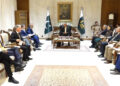
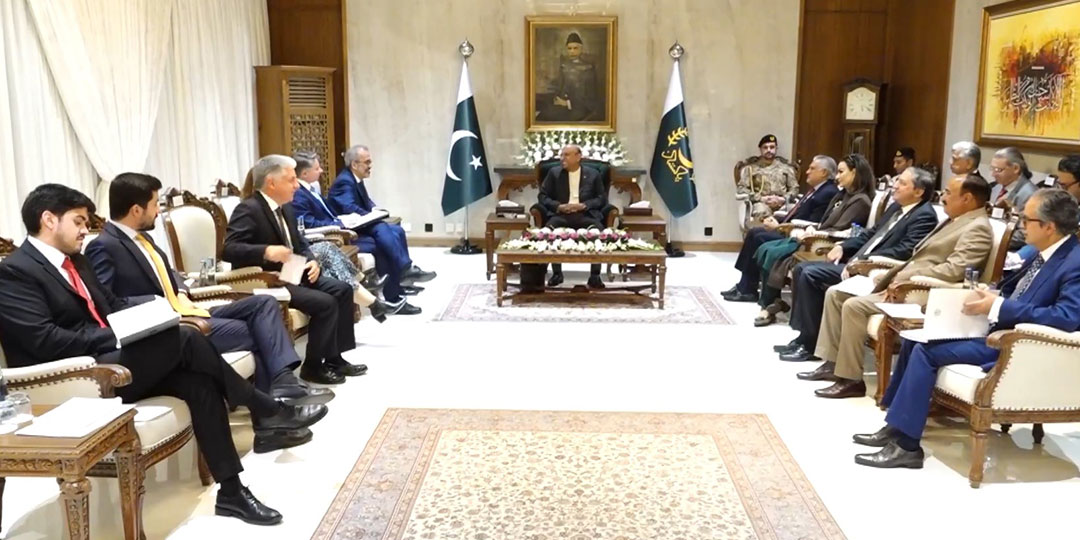
In a separate meeting, Pakistani President Asif Ali Zardari discussed ways to expand trade, investment and agricultural cooperation with Portuguese Foreign Minister Paulo Rangel.
According to a statement from the Pakistani presidency, Zardari called for diversifying trade beyond textiles to include food products, pharmaceuticals, engineering goods, sports equipment and IT services.
Joint Task Force Proposed
Zardari proposed a joint trade and investment task force to address obstacles, identify investment opportunities and facilitate cooperation between companies from both countries.
He also voiced hope that a proposed memorandum on agricultural cooperation would be finalized and that a bilateral technical team would be formed to support the sector. Rangel, for his part, said political goodwill should be translated into broader economic and cultural partnerships.
Key areas discussed included:
– Trade and investment
– Agriculture and food security
– Renewable energy
– Education and research
– Technology and start-ups
– Shipping and logistics
Conclusion:
The Pakistan-Portugal talks signal a push to turn warm political relations into broader practical cooperation, with a clear emphasis on trade, labor mobility, agriculture and investment.