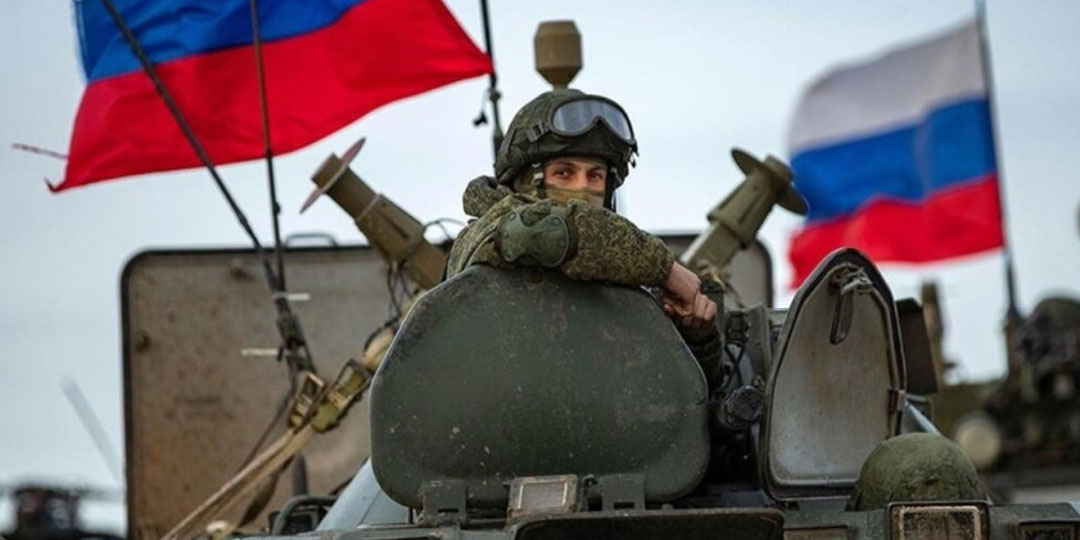

Russia’s Defense Ministry announced control over two additional towns in eastern Ukraine – Greshino in Donetsk and Veterinarnoe in Kharkiv – marking the latest in a series of incremental territorial claims now stretching into the fourth year of war. The announcement comes amid a deepening humanitarian catastrophe, as United Nations officials warn that the failed Easter ceasefire attempt signals a conflict spiraling further out of control, with mounting civilian casualties and deteriorating conditions across occupied and contested zones.
The territorial claims, while contested by independent analysts, underscore a grinding war of attrition with no clear military resolution in sight. Meanwhile, the UN’s stark assessment reveals that the human cost of continued fighting far exceeds the strategic value of disputed towns and villages.
Russia Reports Incremental Military Advances
Russia’s Defense Ministry reported that its forces inflicted 1,050 casualties on Ukrainian troops across multiple fronts over a 24-hour period. The ministry also claimed that Russian air defense systems intercepted 13 guided bombs, three HIMARS missiles, and 434 Ukrainian drones targeting Russian territory.
While these figures reflect the intensity of daily combat operations, they require careful scrutiny. Since the war began in February 2022, both Russia and Ukraine have issued near-daily combat reports that typically lack independent verification. The fog of war, combined with the propaganda interests of both sides, makes it difficult to confirm the precise scale of losses and ground damage with certainty. Military analysts consistently note that such figures should be viewed as claims rather than verified facts.
Drone Interceptions Signal Continued Aerial Warfare
Russia’s Defense Ministry stated that its air defense systems shot down 97 Ukrainian drones in a single night across multiple regions. According to the ministry, Ukrainian forces targeted areas including Astrakhan, Belgorod, Volgograd, Voronezh, Kursk, Rostov, Samara, and Saratov, as well as the Black Sea region.
The scale of drone operations reflects the evolved nature of the conflict. Both sides now rely heavily on unmanned aerial vehicles for reconnaissance, strikes on logistics, and pressure against rear-area targets. This shift underscores how the war has transformed from a conventional mechanized conflict into a protracted attrition campaign powered by long-range strikes and distributed warfare tactics.
The Problem of Unverified Military Claims
A critical caveat applies to all battlefield numbers issued by either belligerent:
- No independent verification mechanisms exist for daily casualty and material loss claims
- Access to conflict zones remains severely restricted, preventing on-ground confirmation
- Both sides have strategic incentives to inflate enemy losses and minimize their own
- International monitoring bodies lack real-time access to assess accuracy
- The chaotic nature of frontline combat makes precise accounting nearly impossible
UN Issues Stark Warning on Humanitarian Catastrophe
Two senior United Nations officials issued grave warnings about the deteriorating humanitarian situation in Ukraine. Khaled Khiari, UN Assistant Secretary-General for the Middle East, Asia and the Pacific, informed an emergency Security Council session that an attempted 32-hour Easter ceasefire (April 11-12) completely failed to hold.
Ukraine had previously proposed a temporary truce around Easter. Russia announced a 32-hour pause in response. Ukraine reciprocated the gesture. Yet within hours, the ceasefire unraveled. Reports documented continued fighting near front lines, civilian casualties, and a rapid resumption of large-scale hostilities immediately after the brief window closed.
“The ceasefire was not respected,” Khiari stated, noting that this failure reflects the fundamental difficulty of negotiating even the most limited truces in an active conflict. The collapse of the Easter pause demonstrates that without a comprehensive political settlement, temporary humanitarian gestures remain fragile and easily broken.
Attacks Deliberately Target Civilian Infrastructure and Aid Operations
Joyce Mosuya, Deputy Coordinator for Emergency Response at the UN, detailed the escalation in attacks on civilian targets over the past month. These strikes have systematically targeted:
- Residential neighborhoods and civilian population centers
- Public transportation networks and civilian movement infrastructure
- Energy networks and power generation facilities
- Port infrastructure and maritime facilities
- Humanitarian evacuation teams and relief workers
Mosuya stated: “Humanitarian needs remain enormous, even as diplomatic efforts continue.” She emphasized that access to certain areas remains severely restricted due to active combat. Critically, she noted that evacuation teams “regularly report being struck by drone attacks, which directly impairs their operations.”
The targeting of humanitarian aid workers represents a particularly grave violation. When relief personnel cannot operate safely, the population’s vulnerability multiplies exponentially.
Access Barriers and Operational Constraints
The UN highlighted specific obstacles hampering the delivery of life-saving assistance. Capacity to reach affected populations remains constrained for several interconnected reasons:
- Intensity of active combat operations prevents safe passage
- No established humanitarian corridors currently function reliably
- Systematic targeting of aid convoys and personnel creates deterrent effects
- Lack of international guarantees for relief operations
- Destroyed transportation infrastructure limits mobility in affected regions
- Medical facilities overwhelmed or damaged, reducing treatment capacity
UN officials stressed the need for immediate protective measures: full protection for humanitarian workers, guaranteed safe passage for relief convoys, timely financial contributions to support operations, and binding international commitments to respect humanitarian exemptions during military operations.
Diplomatic Efforts Fall Short Amid Continued Fighting
Khiari called for “steadfast international commitment” to ending the war, citing ongoing U.S. diplomatic efforts as the primary framework. However, his language revealed the gap between aspiration and reality.
He urged “sustained attention and engagement in coordinated diplomatic efforts aimed at securing a complete, immediate, and unconditional ceasefire.” The use of the word “unconditional” signals the absence of current agreement – if conditions existed, the ceasefire would already be in place. This formulation underscores that despite four years of conflict and countless diplomatic initiatives, no consensus framework for ending the war has materialized.
The failure of even a symbolic 32-hour Easter pause suggests that the political chasm separating the parties remains vast.
The Cost of Prolonged Attrition
Beyond the disputed territorial claims and military statistics, the human cost of the war’s continuation becomes clearer with each month. An estimated 20,000-plus military-age men have been killed or wounded in combat since February 2022. Civilian casualties, while difficult to quantify precisely, number in the tens of thousands. Millions of Ukrainians remain internally displaced or have fled to neighboring countries.
Infrastructure damage totals in the hundreds of billions of dollars. Entire cities have been reduced to rubble. Medical systems are strained beyond capacity. Economic output has collapsed. The social fabric of Ukrainian society has been fundamentally altered.
For civilians trapped in conflict zones, the failure to achieve even a temporary ceasefire means continued exposure to bombardment, food scarcity, lack of medical care, and psychological trauma. The diplomatic stalemate ensures that this suffering continues indefinitely.
Conclusion:
After four years of intensive warfare, the battlefield remains fluid but fundamentally stalemated. Russia continues to claim incremental territorial advances, but these gains come at immense human cost with no strategic breakthrough achieved. Ukraine resists and inflicts heavy losses on attackers, but faces overwhelming Russian material advantages and manpower reserves. The failed Easter ceasefire attempt stands as a metaphor for the broader impasse: even symbolic gestures toward peace cannot survive contact with the logic of continued warfare.
The UN’s warnings carry weight precisely because they reflect what international observers have consistently found: no military solution to this conflict appears within reach for either side. Yet the absence of a political framework for settlement means that civilians, soldiers, and humanitarian workers will continue bearing the costs of this attrition indefinitely. The gap between the rhetoric of diplomatic engagement and the brutal reality of daily combat operations has never been wider.