
The latest round of US–Iran nuclear talks has produced cautious diplomatic signals, but sharp warnings from Washington underline the fragility of the process. US Energy Secretary Chris Wright said the United States would stop Iran from acquiring nuclear weapons “one way or the other,” as negotiations continue in Geneva under Omani mediation.
Speaking in Paris on the sidelines of International Energy Agency meetings, Wright said President Donald Trump “believes firmly we cannot have a nuclear-armed Iran,” adding that Tehran’s potential possession of nuclear weapons would be “entirely unacceptable.”
His remarks came a day after US and Iranian officials met in Geneva in what both sides described as constructive discussions aimed at avoiding military escalation.
Washington Signals Deterrence as Diplomacy Continues
US officials indicated they prefer a diplomatic resolution but have not ruled out stronger measures if talks fail.
Vice President JD Vance said that while discussions showed progress, Tehran had not yet acknowledged all of Washington’s “red lines.”
“In some ways, it went well; they agreed to meet afterwards,” Vance said in a televised interview. “But it was very clear that the president has set some red lines that the Iranians are not yet willing to acknowledge and work through.”
Washington has increased military deployments in the region in recent weeks, dispatching two aircraft carriers. Satellite images cited by AFP showed the USS Abraham Lincoln positioned roughly 700 kilometres from Iran’s coast, placing its aircraft within operational range.
US officials have stated the military build-up is intended to deter escalation while negotiations continue.
Tehran Drafts Framework for Future Talks
On the Iranian side, Foreign Minister Abbas Araghchi said Tehran had agreed with Washington on “guiding principles” to move forward toward a potential agreement.
Araghchi confirmed that Iran is drafting an initial framework for future negotiations. In a phone call with International Atomic Energy Agency chief Rafael Grossi, he stressed Iran’s focus on preparing a “coherent framework” to advance discussions, according to Iran’s foreign ministry.
Key points emerging from the diplomatic track include:
Agreement on broad guiding principles
Plans to exchange draft texts for a possible deal
Preparations for a third round of talks
Continued mediation by Oman
Omani Foreign Minister Badr Albusaidi said “good progress” had been made but cautioned that substantial work remains.
Iran has insisted that negotiations remain limited to the nuclear issue. Washington has previously sought to expand discussions to include Iran’s ballistic missile programme and its regional alliances.
IAEA Role and Inspection Disputes
The International Atomic Energy Agency remains central to verification efforts.
Iran’s permanent representative to the IAEA, Reza Najafi, met in Vienna with Grossi and the ambassadors of China and Russia to discuss upcoming Board of Governors meetings and developments related to Iran’s nuclear programme.
Tehran has suspended parts of its cooperation with the IAEA and restricted inspector access to sites targeted during the 12-day conflict with Israel in June, in which the United States also struck Iranian nuclear facilities. Iranian officials accuse the agency of bias and failing to condemn those strikes.
Western governments have long expressed concern that Iran’s nuclear programme could be directed toward producing a nuclear weapon. Tehran maintains that its programme is for peaceful purposes only.
President Masoud Pezeshkian reiterated this week that Iran is “absolutely not seeking nuclear weapons,” stating that Tehran is open to verification mechanisms.
Military Signalling and Regional Implications
Alongside diplomacy, both sides have engaged in military signalling.
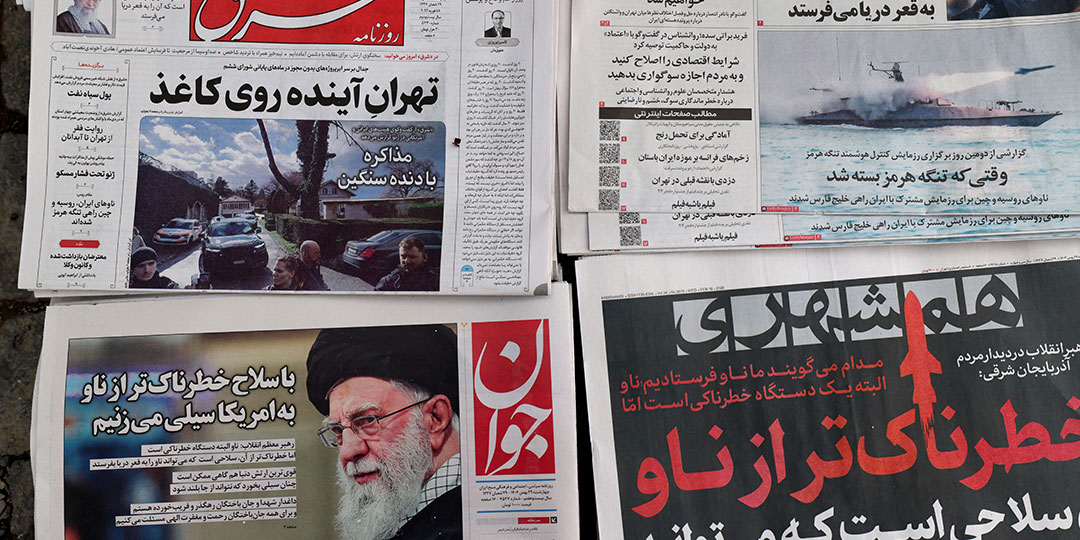
Iran’s Islamic Revolutionary Guard Corps launched military exercises in the Strait of Hormuz, describing them as preparation for potential security and military threats. Iranian officials have previously threatened to close the strategic waterway, through which a significant portion of global oil and gas supplies passes.
Supreme Leader Ayatollah Ali Khamenei warned that Iran has the capability to target US naval assets deployed near its shores.
The diplomatic process follows last year’s 12-day war between Israel and Iran, during which Israeli strikes targeted Iranian territory and the United States joined by bombing nuclear sites. That conflict halted earlier diplomatic efforts.
Key Outstanding Gaps
Despite reported progress, several issues remain unresolved:
Scope of any agreement beyond nuclear restrictions
Extent of sanctions relief sought by Iran
Verification mechanisms and IAEA access
US conditions described as “red lines”
Analysts note that Iran faces economic pressure due to longstanding US sanctions, including restrictions on oil exports. At the same time, major concessions could carry domestic political implications within Iran.
Conclusion
The current round of US–Iran nuclear talks reflects parallel tracks of diplomacy and deterrence. While both sides report progress toward drafting a framework, public statements from Washington highlight unresolved red lines and the possibility of stronger action if negotiations collapse.
Whether the Geneva process leads to a formal agreement or renewed confrontation will depend on bridging key gaps in the coming rounds.