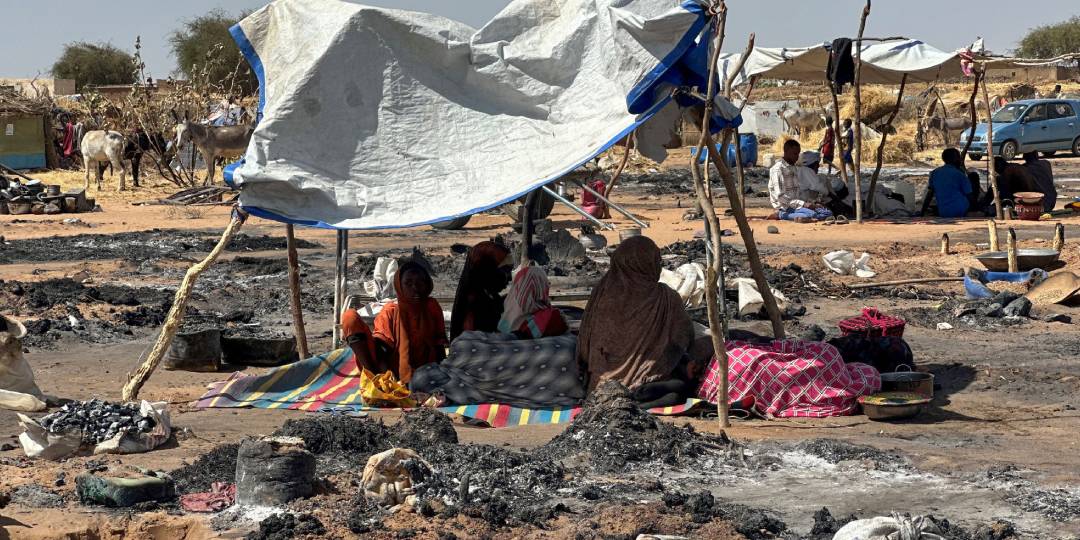

The United Nations has accused Sudan’s Rapid Support Forces of committing war crimes in El Fasher and possible crimes against humanity following their takeover of the city in October.
In a report released in Geneva, the UN Human Rights Office documented the killing of at least 6,000 people during a week-long assault, warning that the actual death toll is likely significantly higher.
The findings come amid the ongoing war between the Sudanese Armed Forces and the Rapid Support Forces, which erupted in April 2023 and has killed tens of thousands while displacing millions, particularly in the Darfur region.
UN Report Documents More Than 6,000 Killed
According to the UN Human Rights Office, the findings are based on interviews conducted in late 2025 with more than 140 victims and witnesses in Northern State, Sudan, and eastern Chad.
The report documents more than 6,000 people killed during the first three days of the RSF assault on El Fasher, the capital of North Darfur state, after approximately 18 months of siege.
Key findings include:
At least 4,400 people killed inside El Fasher.
More than 1,600 killed while attempting to flee the city.
Thousands remain missing.
The UN warned that the overall toll from the week-long attack is “undoubtedly much higher” than the documented figures.
Patterns of Violations
The report states there are “reasonable grounds to believe” that the Rapid Support Forces and allied Arab militias committed acts amounting to war crimes in El Fasher, including:
Mass killings and summary executions.
Deliberate and indiscriminate attacks on civilians and civilian objects.
Use of starvation as a method of warfare.
Sexual violence, including rape and gang rape.
Torture, ill-treatment, and abductions for ransom.
Recruitment and use of children in hostilities.
In several cases, civilians were reportedly targeted based on ethnic identity, particularly members of non-Arab communities such as the Zaghawa. Men and boys under the age of 50 were specifically targeted in some incidents.
Mass Killings and Attacks on Shelters
The UN documented incidents in which large numbers of civilians were killed at gathering points. Witnesses provided consistent accounts of an attack on October 26 at the Al-Rashid dormitory of El Fasher University, where approximately 500 people were killed after RSF fighters opened fire with heavy weapons on around 1,000 civilians seeking shelter.
The report also details the use of civilian facilities as detention centers, including a children’s hospital reportedly converted into a place of detention. Detainees were held in harsh conditions that led to disease outbreaks and deaths in custody.
Calls for Accountability and ICC Involvement
UN High Commissioner for Human Rights Volker Turk said the deliberate violations committed during the assault underscore how continued impunity fuels recurring cycles of violence. He called for credible and impartial investigations to establish criminal responsibility, including that of commanders and senior officials.
Turk said accountability could involve fair and independent Sudanese courts, the exercise of universal jurisdiction by third countries, or proceedings before the International Criminal Court.
He also noted that the UN’s findings align with earlier conclusions by the Office of the Prosecutor of the ICC, which has indicated that war crimes and crimes against humanity were committed during the takeover of El Fasher.
Broader Pattern in Darfur
The UN report states that the violations in El Fasher mirror patterns previously documented in:
Attacks on Zamzam camp for displaced persons in April 2025.
Violence in El Geneina and Ardamata in 2023.
Taken together, the UN said these incidents indicate a systematic attack against civilian populations in Darfur, which may amount to crimes against humanity under international law.
The High Commissioner urged all parties to the conflict to halt serious violations and called on states with influence to act urgently to prevent further abuses, including by respecting arms embargoes and halting the transfer of weapons or military equipment to the warring parties.
Conclusion:
The UN’s findings on war crimes in El Fasher place renewed international focus on accountability in Sudan’s conflict, as civilians in Darfur continue to bear the brunt of a prolonged and devastating war.