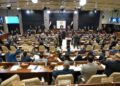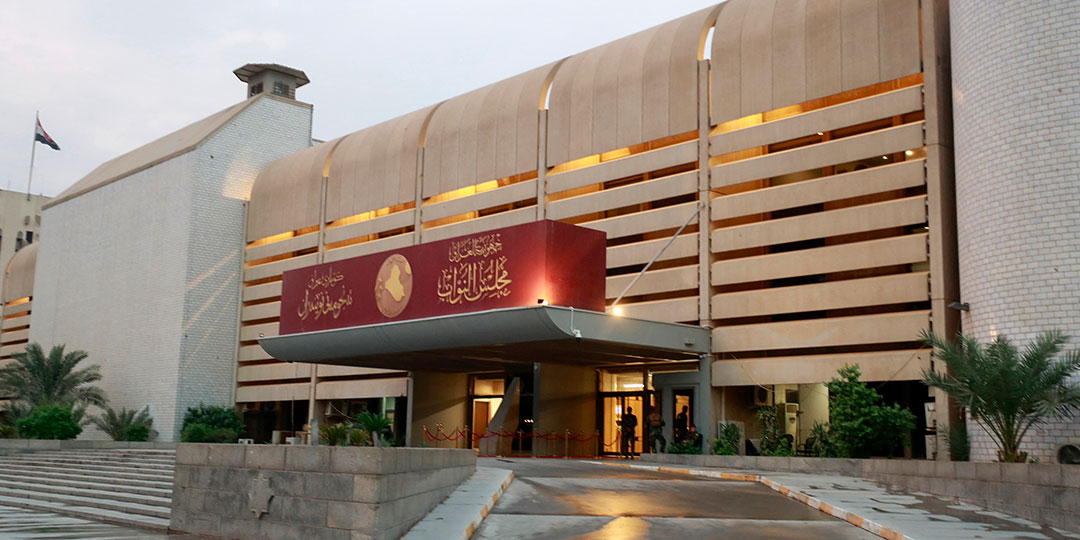

The Iraqi Parliament on Sunday once again postponed the session to elect the country’s new president due to a failure to reach the required quorum, according to state media. This marks the second delay of the presidential vote, exacerbating a political deadlock centered on the nomination of the next prime minister.
The delay comes as the Coordination Framework, Iraq’s main Shiite parliamentary alliance, reaffirms its support for Nouri al-Maliki as its candidate for prime minister, despite direct warnings from the United States. Last week, US President Donald Trump described Maliki as a “very bad choice” and stated that if he were elected, the US “will no longer help Iraq.”
In response, the Coordination Framework issued a statement on Saturday asserting that the selection of a prime minister is an “exclusively Iraqi constitutional matter… free from foreign interference.” The alliance emphasized its commitment to “balanced relations with the international community… based on mutual respect and non-interference in internal affairs.”
Al-Maliki, who served two terms as prime minister from 2006 to 2014, initially had the support of the US but later saw relations sour over his strengthening ties with Iran. Two sources close to the Coordination Framework informed AFP that US representatives in Baghdad recently met with Maliki and conveyed that Washington’s position is “final.” This has reportedly caused divisions within the Shiite leadership, with some fearing potential US sanctions if Maliki returns to power.
The political process remains stalled on multiple fronts. By convention, Iraq’s presidency is held by a Kurd, the prime ministership by a Shiite, and the parliament speakership by a Sunni. However, the main Kurdish parties, the Patriotic Union of Kurdistan (PUK) and the Kurdistan Democratic Party (KDP), have not yet agreed on a single candidate for president.
Once a president is elected, they have 15 days to task the nominee from the largest parliamentary bloc with forming a government. With the presidential vote now postponed indefinitely, the parliament speaker is expected to meet with party bloc leaders to set a new date for the session.
The Iraqi Parliament continues to face significant political challenges, leading to another delay in the crucial vote for the nation’s next president. The inability to achieve a quorum underscores the deep divisions among political blocs, particularly concerning the formation of the next government and the selection of its leadership. This deadlock is compounded by external pressures and internal disagreements over key positions.
At the heart of the current stalemate is the nomination of Nouri al-Maliki for prime minister by the Shiite Coordination Framework. The decision has drawn a strong reaction from the United States, creating further complexity for the Iraqi Parliament as it navigates the path forward. Meanwhile, the lack of consensus on a presidential candidate from the Kurdish parties adds another layer of uncertainty to when the Iraqi Parliament will be able to proceed with its constitutional duties.
According to multiple media sources.